An Ode, To The Second Highest Ranked NES Racing Game
Landing itself just outside of the top seventy of the list was the 1990 release of Formula 1: Built to Win: and can be seen as a turning point in the evolution of the console racing video game.

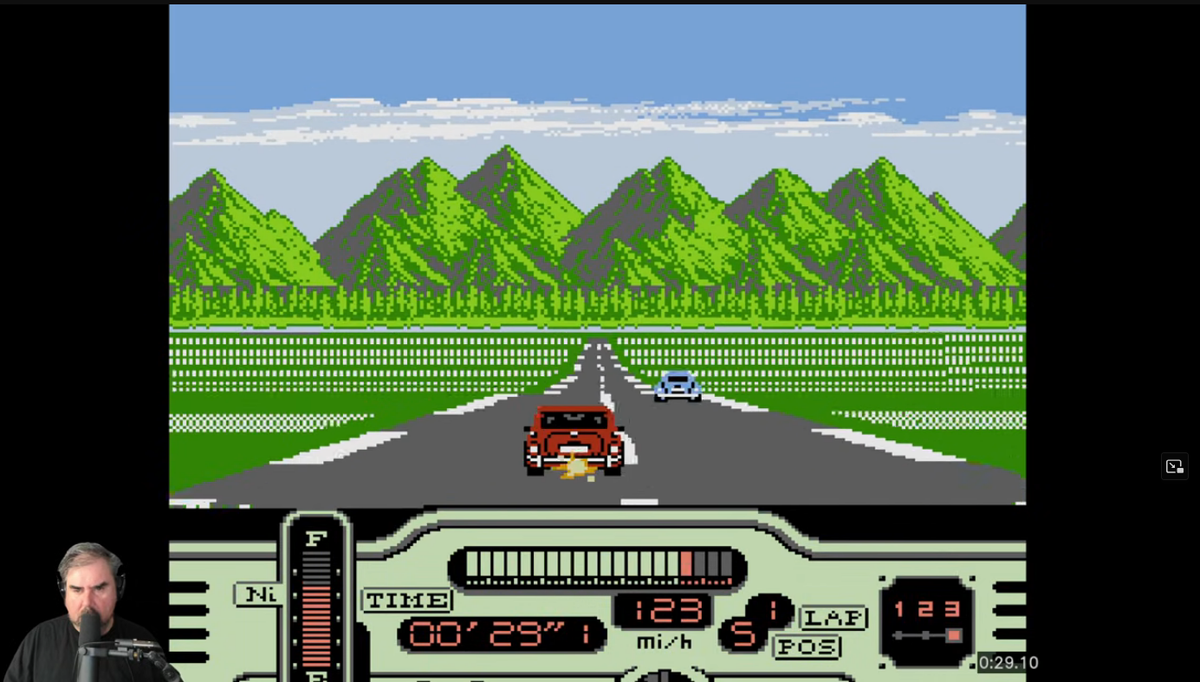
In the early days of racing games, there were effectively two evolutionary lines in which titles followed and tried to improve upon. Racing games on 8-bit hardware were by and large birthed from the rib of either Pole Position for racing in the third-person with the camera behind the car, or Super Sprint which used an isometric 3D perspective with your pint-sized car racing around a track that was the entirely, or partially visible on screen. These were some of the initial racing games that people came back for more with in the arcades, and it was clear that they would translate into the home without too much compromise. On the NES, Rad Racer would be the benchmark for those following in the wake of Pole Position while games like Ivan 'Ironman' Stewart's Super Off Road would keep the ball rolling for those continuing what Super Sprint started.
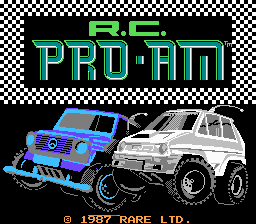
At the same time, there was a conundrum facing the genre and video game developers as a whole. This was a time of rediscovery in the wake of The Crash of 1982 in terms of what video games on home consoles and computers should be and look like going into the future. There was only so far that games that were a direct translation of arcade cabinet sensibilities were going to go in the marketplace, though R.C. Pro-Am from Rare is among the very best racing games ever made and itself was in that more pure arcade cabinet style. Core game design principals were changing, major releases now had to be bigger than the potential game time that was possible with a weekend rental. The high score you accrued with your three lives started to stop mattering, and the idea of "beating" a game and having there be some level of finality picked up steam. That hook of accomplishment helped bring Nintendo to power through the late 80s into the 90s as the video game space got revived in North America, but that transition in terms of racing games still took some time.
Racing games on the Nintendo Entertainment System can be about as raw as it gets, as Jeff Gertsmann has been discovering as he plays through every NES title released during the life of the 8-bit console and ranking them based on how good or diabolically bad they are. The full rankings list can be found at 8bitnintendo.science and scientifically speaking, Bill Elliott's NASCAR Challenge and Michael Andretti's World GP are absolutely brutal video games. The screen where Bill Elliot takes away your NASCAR license is the highlight of his game, and the slot-car style of steering lanes in Michael Andretti's game was an interesting idea but perhaps not for a game replicating CART and Formula 1.
images from mobygames.com
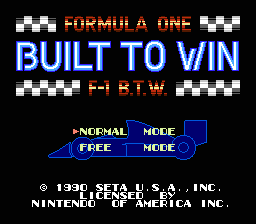
At the top of the racing game pile is the aforementioned R.C. Pro-Am, landing itself twenty-sixth out of the six hundred-plus games thus far that have been ranked. But the most recent racing game on the list was one that for some thirty-five years has largely fallen under the radar within the realm of the racing game, and one that Jeff was blown away by when he played it for the first time on stream a few weeks ago. Landing itself just outside of the top seventy of the list was the 1990 release of Formula 1: Built to Win: and can be seen as a turning point in the evolution of the console racing video game.
Developed by Winkysoft and published by SETA in 1990, Formula 1: Built to Win paved new ground in the racing game genre on the consoles, being among the very first to have a grander scale at hand, and a more engaging single player campaign. You start with a humble Mini Cooper and have to earn money in races, buy performance upgrades for it and perform upkeep on tires and nitrous, and work towards improving your license and buying faster cars before earning a chance to race in Formula 1. Each of the cities you travel to have a parts shop, their own races and a unique shop to that city that is very similar to the menu navigation style and progression that was found in the original Gran Turismo seven years later. Much like Gran Turismo, there is an infinite grind-ability to the game if one wanted to just run races, earn cash and become better at a game which drove in the same light as Rad Racer. Rad Racer, however, was just eight timed point-to-point races with not a whole lot going on beyond that, even though that was much more acceptable when it was released three years prior.
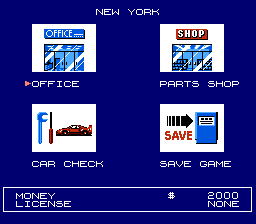
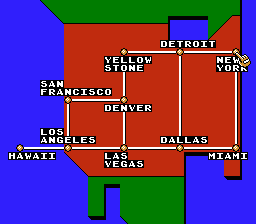
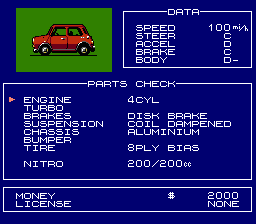
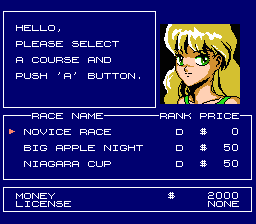
images from mobygames.com
When Rad Racer and R.C. Pro-Am were released it was understood that that's how a bulk of video games were, with that expansion in scope and scale seen in Metroid and The Legend of Zelda on the very edge of what was possible. Normally if you completed all the levels in a game in that time, the game would either loop with the opponents being a little bit faster or that was simply it with your high score needed to be jotted down on pen and paper if you think you could better it later. With Formula 1: Built to Win, there was that increased player agency that Jeff discussed in his playing of the game, and a much heightened sense of accomplishment that was possible when you make it to the big time on the back of cars that you bought and upgraded on your own terms. In the world of racing games, this may have been the first time that this was done on the consoles and would have been a shock to the system if the game was a financial and critical success back in the day. A shock to the system that Gran Turismo was able to achieve when it showed the scope of what was possible when racing games entered the third dimension and went beyond just racing.
The uptick in scale and developments in the racing genre through the 16-bit consoles largely ignored Formula 1: Built to Win; the act of a race came back into the spotlight as well as racing games becoming a prime place for showing off the ever improving technology at hand. It would be a flash in the pan, though games like Super Monaco GP would move things forward with it's single player campaign providing the challenge of rising through the ranks by trying to prove your worth to join better teams on the Formula 1 grid. The Top Gear games may have had upgradable cars, but it existed in a more linear environment as a scene between races before going straight back into the action like was in the case in Ivan 'Ironman' Stewart's Super Off Road. It wasn't just Gran Turismo that put in the effort to try and expand the scope of what was possible when a racing game went beyond just racing, with Tokyo Highway Battle attempting to do the same on Playstation a year prior, but that's still more than half a decade after Winkysoft made something truly, truly special.
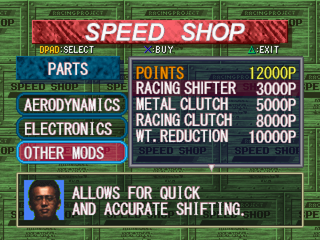
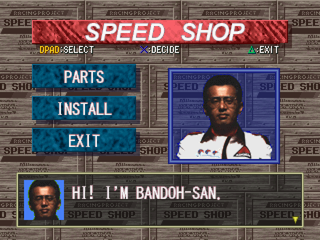
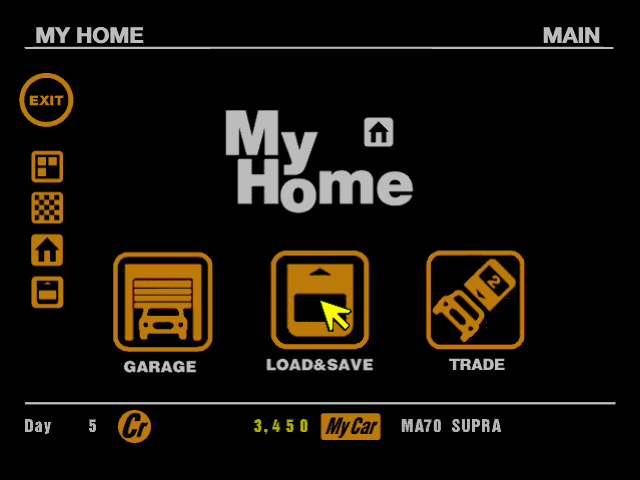
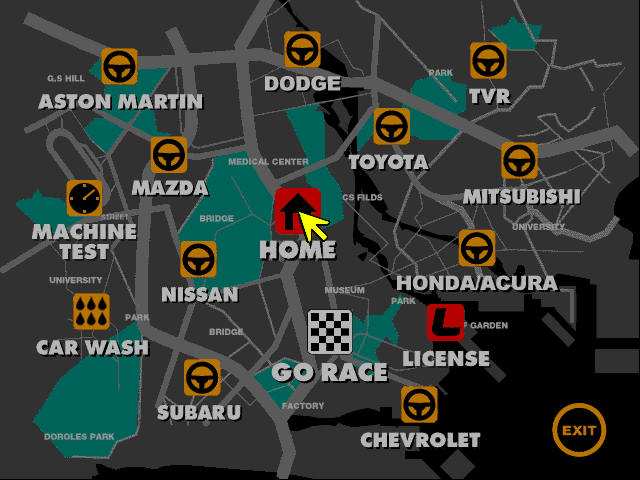
images from mobygames.com
The evolution of racing games goes hand in hand with the evolution of video games at large. What's one the easiest way to show off what was newly graphically possible? Make a driving game that tries to leave the past visually in the past. In that meantime between new consoles, it's always up to the game does as itself to make that distinction and move the paradigm forward. Formula 1: Built to Win drives really well for what was expected of a racing game in that style, the performance upgrades make an immediate impact both in pace and how you're able to deal with the opponents playing defense trying to impede your progress. The Formula 1 tracks in the game are based on a selection of real world circuits much like in Michael Andretti's World GP, but now you can actually race them like one expects to in a video game. Each of the four cars you drive also have their own heads up display when you drive them too, highlighting the increase in technology in place going from a Mini Cooper to a Formula 1 car. The level of effort and care put in is remarkable in a time when racing games were fairly one-dimensional in what they were trying to express.
As Jeff Gertsmann put it, "It leaves Rad Racer in the dust."
R.C Pro-Am may be one dimensional in that regard, but it is the very best of what it was trying to express. If you wanted a isometric 3D racing game that drove incredibly well, and was challenging and engaging in the right ways on 8-bit hardware there is nothing that comes close. Rare maximized what was possible in the early days of the NES and it is worthy as being ranked as the best racing game on the Nintendo Entertainment System according to the science. But it's not a glimpse of the future of where racing games would eventually go when ambition fully caught up to the technology.
Formula 1: Built to Win was that glimpse of the future, and was also able to stand side by side with R.C. Pro-Am as the very best in 8-bit racing when you let the science do the talking.