BRGoF25 - Raising The Bar (Gran Turismo 3)
Polyphony Digital threw everything they could at Gran Turismo 3 to make it everything they visioned it to be, and the industry stopped and looked on in wonder as an impossible standard to reach was raised ever higher.

Welcome to BRGoF25, a look at the Best Racing Games of the First 25 years of the 21st century. A love letter to the titles that defined the genre during this time of immense growth in the industry, transcended boundaries and broke the glass ceiling to become the very best that video games had to offer.
Inspired by Giant Bomb polling their users on what they say is their 10 best games of the 21st century, this series of articles will focus on the racing games that, in my opinion, rubs shoulders with the giants in the industry that make up what GB's users submitted themselves. These are racing games that you should find a way to play for yourself, regardless of your gaming preferences.
"If you have the means, I highly recommend picking one up."
At the turn of the 21st century, the question within the racing game genre was simple: how do you shape up against The Real Driving Simulator? Unless it was a anti-gravity or a kart racer, the standards set by the first two Gran Turismo games pushed the genre into the spotlight as they showed what was truly possible when you make a game that strives to be as good of a racing game and a video game as possible at the same time. It was a giant leap forward that took time for the industry to react to; and for producers, directors and developers to understand what it would take for them to try and get a piece of that capital that Kazunori Yamauchi and his team at Polyphony Digital had discovered was for the taking.
Enough time had passed from that initial shock to the system to where games built as Gran Turismo-killers were starting to be released, with SEGA GT and Driving Emotion Type-S leading that charge with mixed results. But they could not have been prepared for how much Polyphony would continue to raise the bar come the PlayStation 2 and simply blew everything out of the water that dared to have that moniker as the GT-killer. That legend and the target on their backs would continue to grow as Gran Turismo 3 finally landed on the Playstation 2 in the middle of 2001.
Up next on my list of the Best Racing Games of the First 25 years of the 21st century: Gran Turismo 3 for the PlayStation 2.
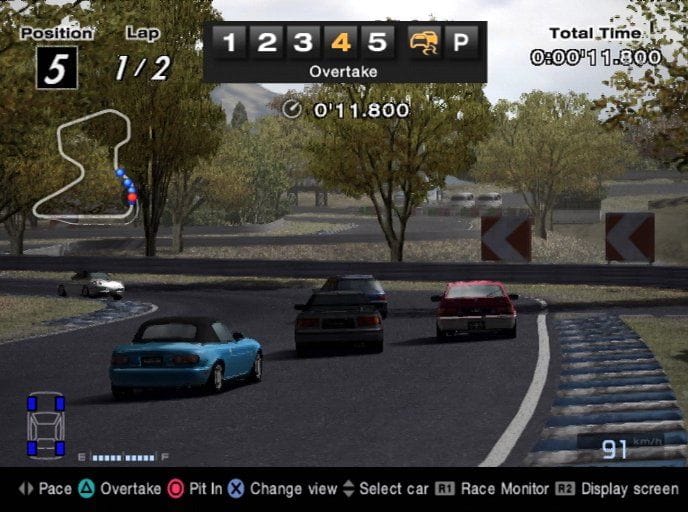
The big improvement that came from the added horsepower and optical storage on the next generation of consoles was that sense of scale that wasn't quite possible in a burgeoning 3D world. There were compromises that had to be made previously: render distances were kept fairly short, fixed camera locations were deliberately placed to mask the emptiness outside of the play areas, crowds weren't actual objects but just the top face of a grandstand's texture, and repeatable forest or mountain walls prevented you from looking up and over to see what isn't on the other side. Tunnels and underground sections weren't unusual in games like the original Wipeout as a means to easily transition from one area to another or completely save on making an outside environment. While it was already apparent the potential that existed on Dreamcast and PS2 while also starting to be seen in later PS1 titles, nothing had nailed this newly possible scope and scale with this level of refinement and purpose as was executed by Polyphony Digital for Gran Turismo 3.
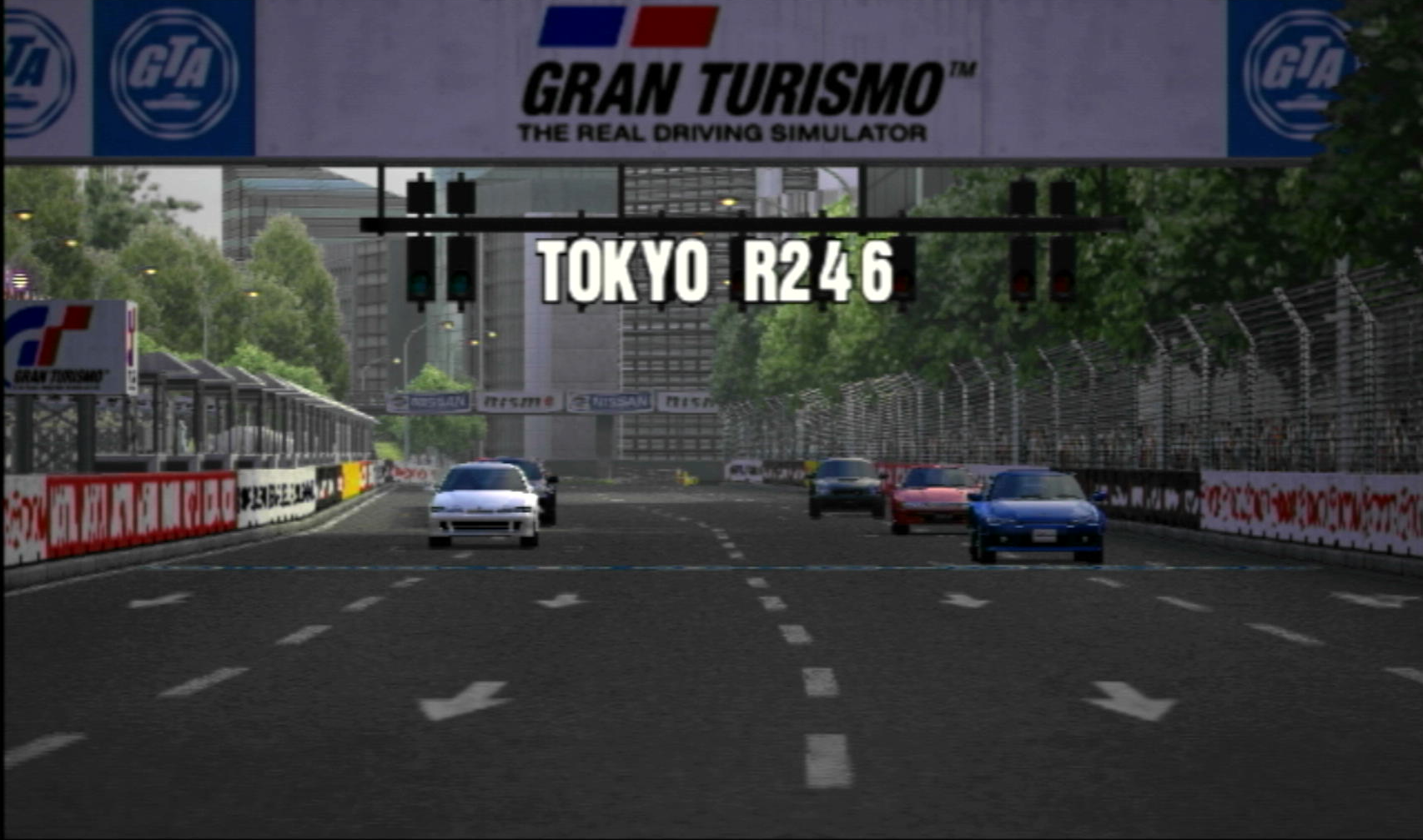
Within the world of racing games, it meant circuit tracks stopped feeling like a populated tube in space and now were fully fleshed out environments that you were immersed in. Perhaps the biggest glow-up in this regard came from the high speed Test Course: which was just a high speed oval surrounded by a forest wall on both sides in the first two Gran Turismo games and now did feel like a secret high speed testing facility. But all the tracks that made the jump to the PS2 got this incredible transformation and were now have been joined by a brilliant recreation of the Monaco Grand Prix circuit and a new street track set within Tokyo, Japan.
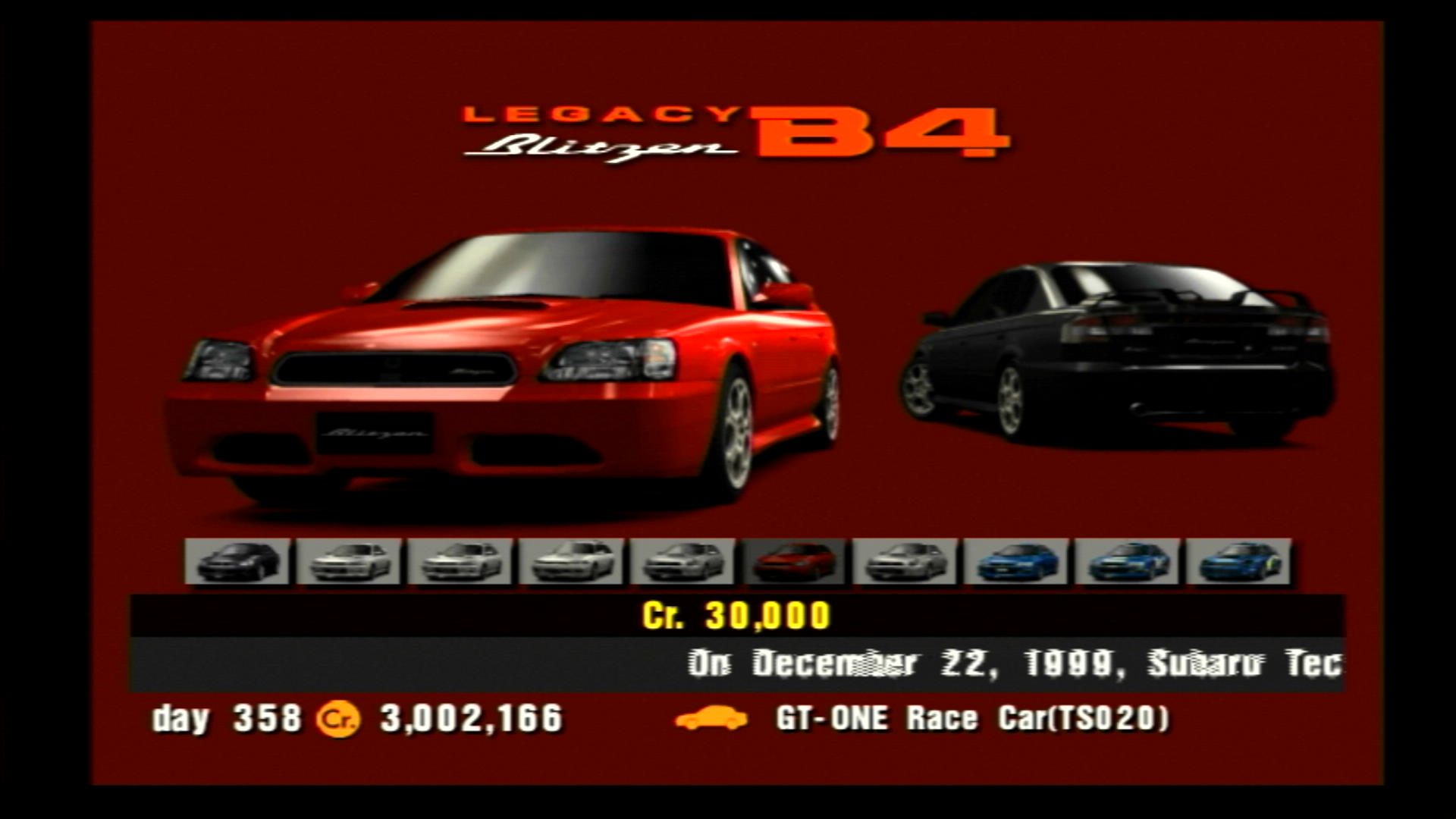
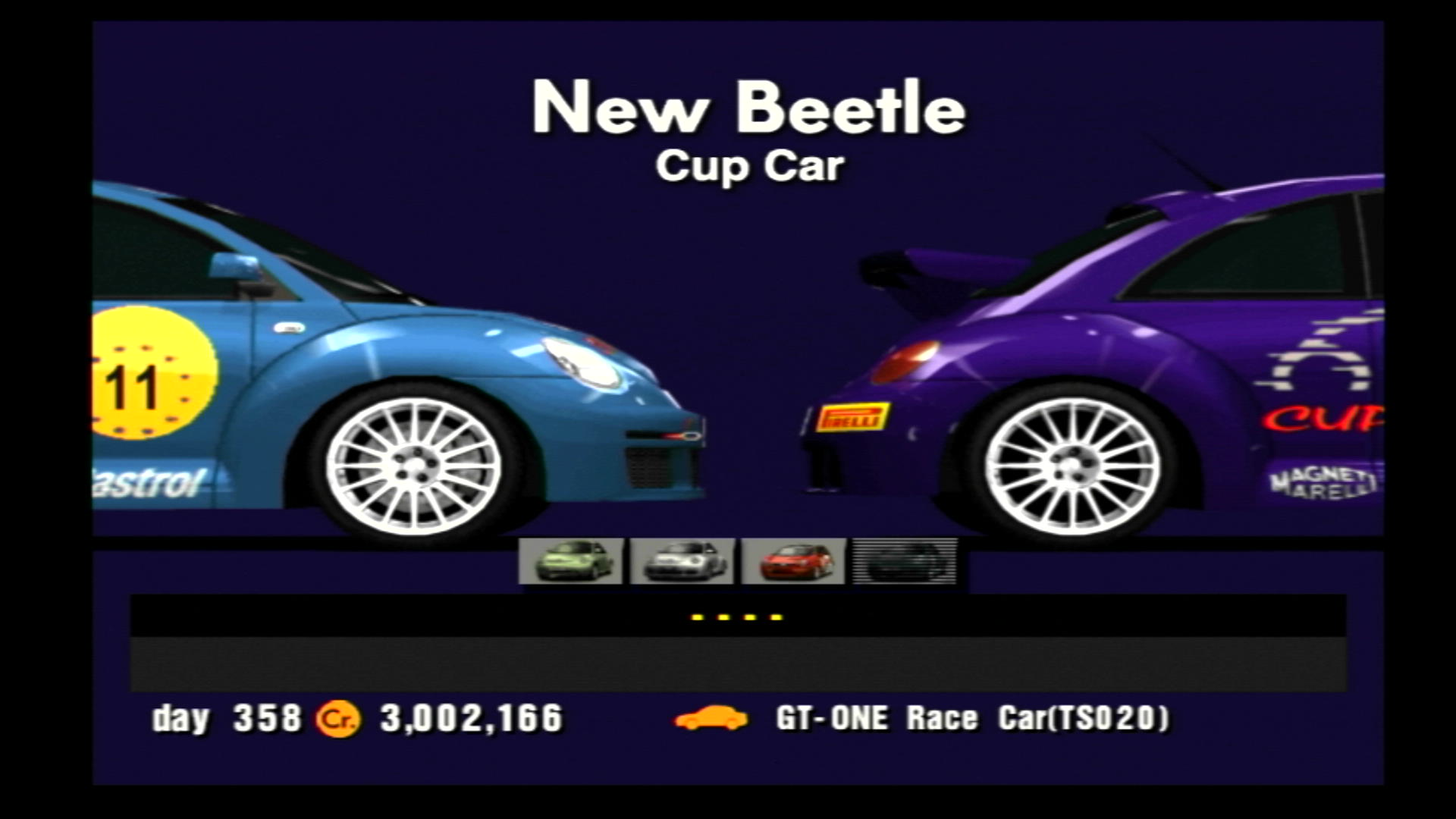
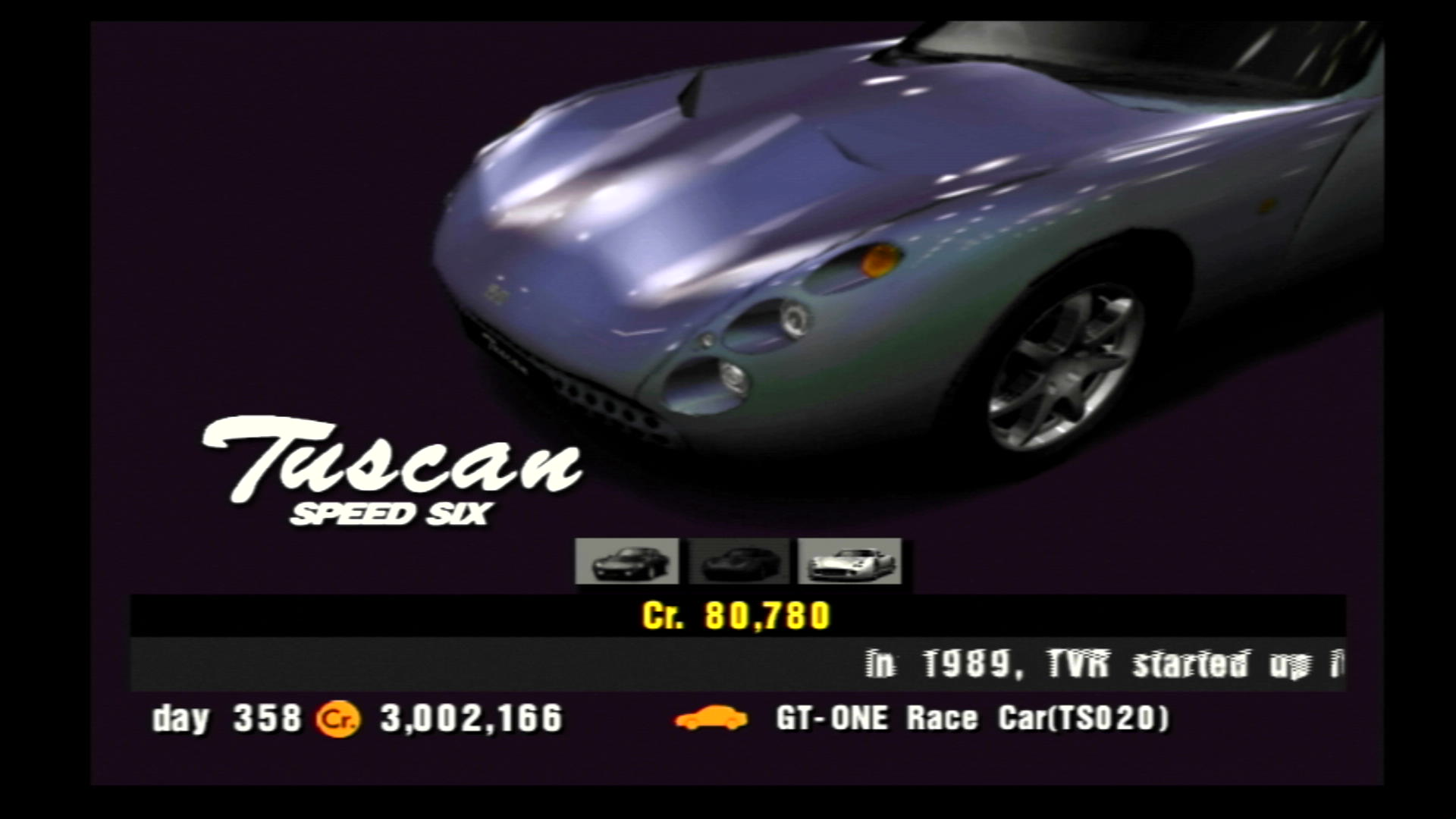
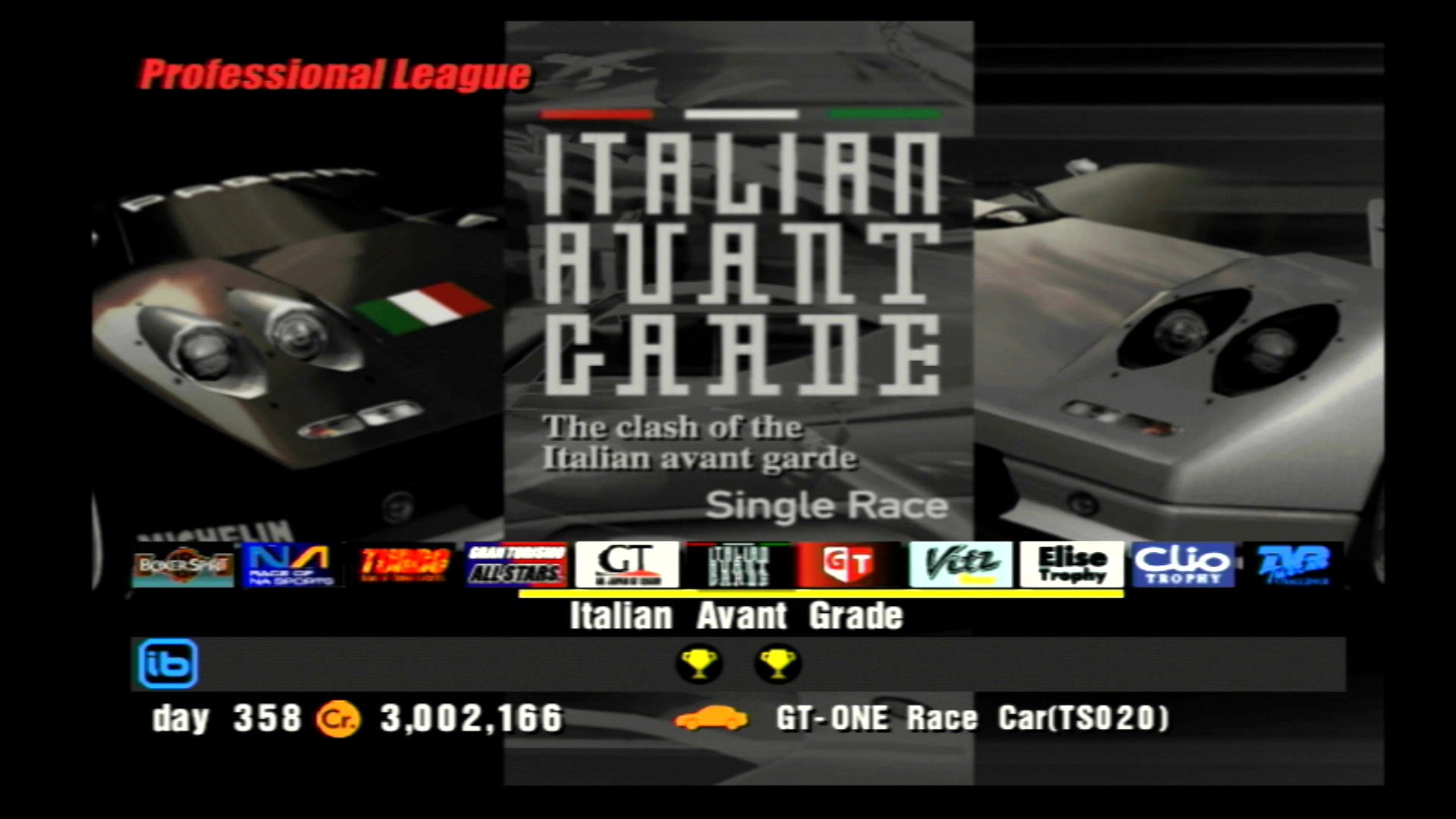
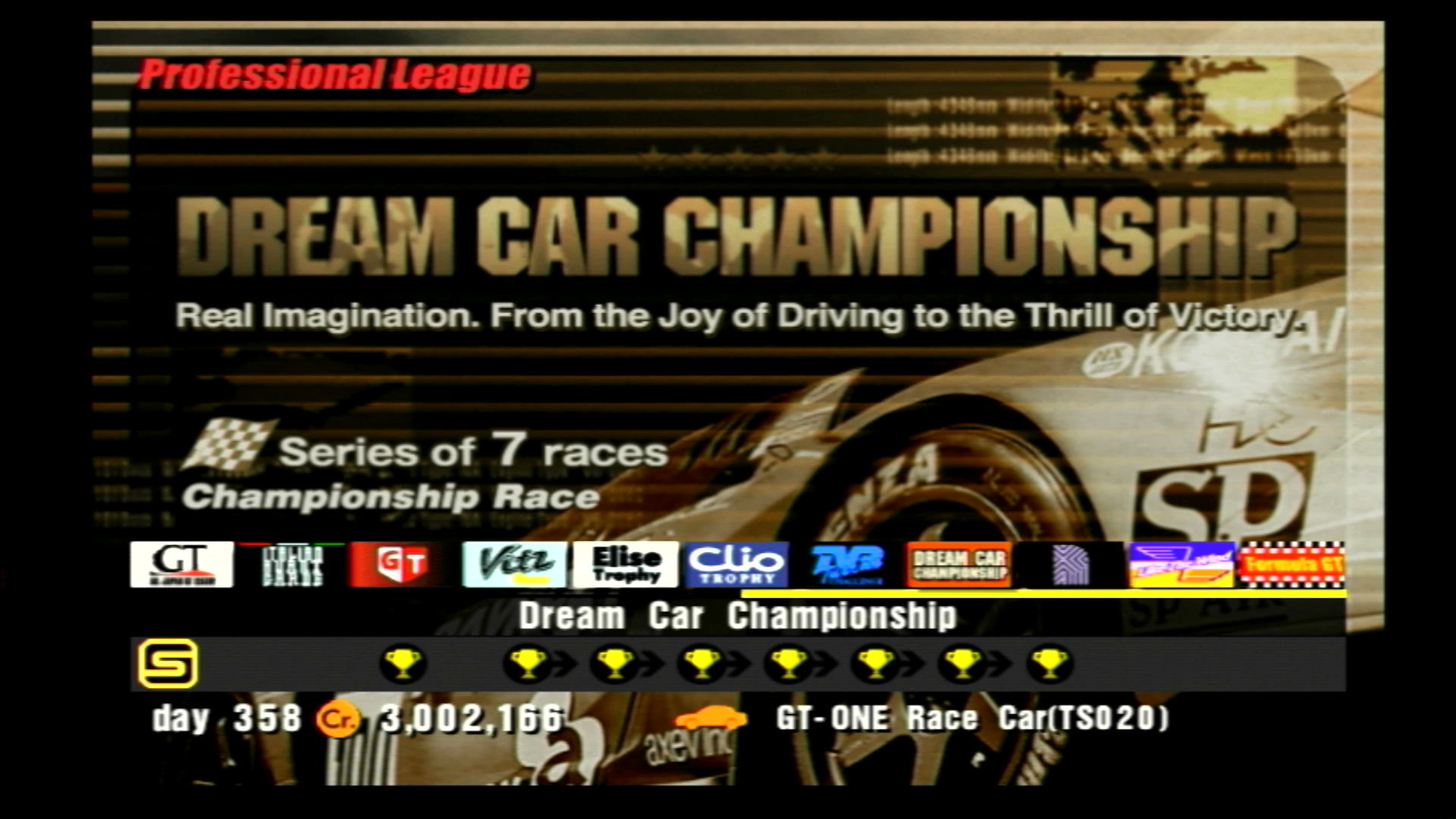
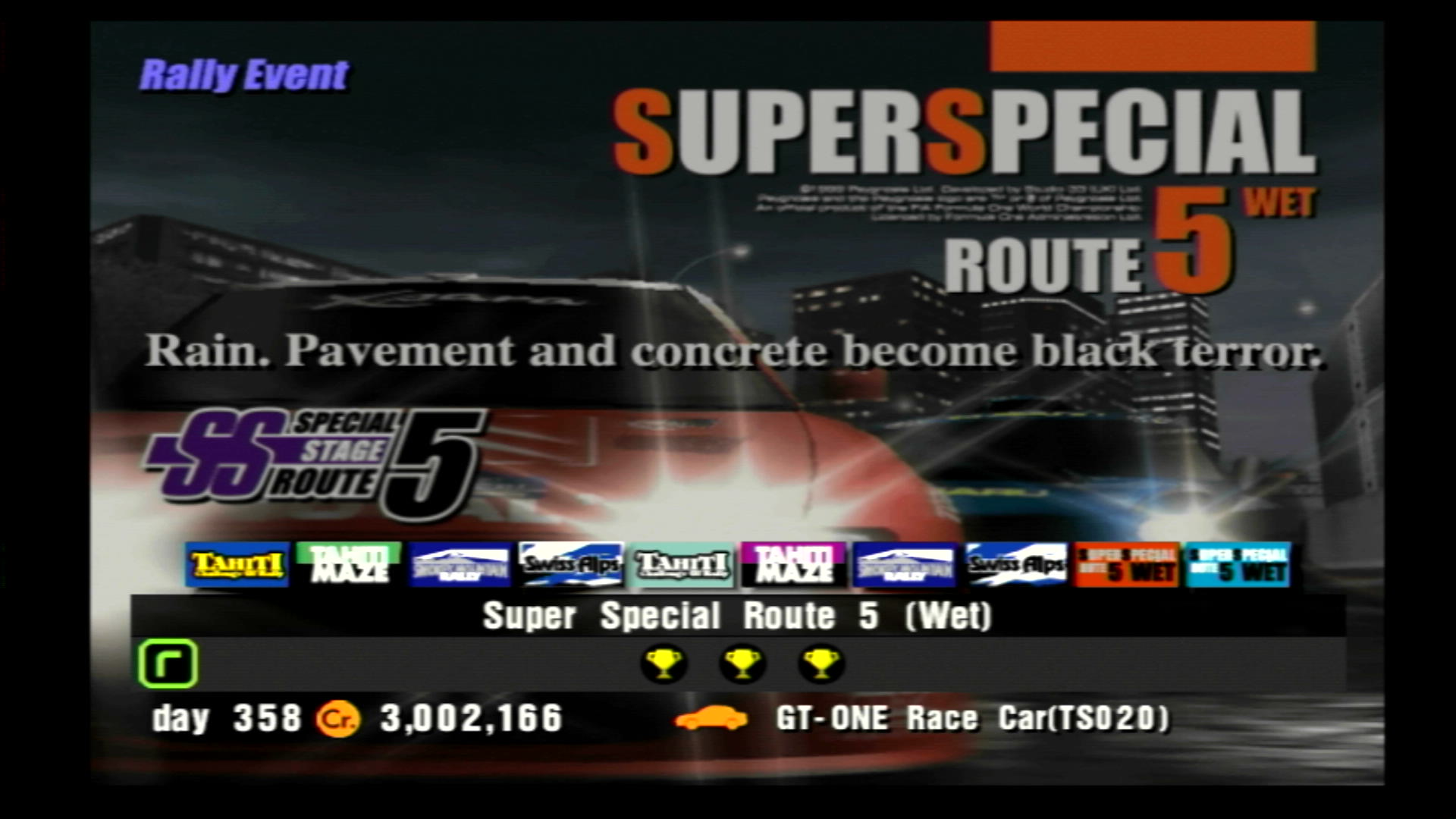
That level of refinement and purpose was felt as soon as you made it to the title screen and navigated through the rest of the menus. The largely minimalist orange and black menu design language from the first two games was scaled back, and brought forward was menus full of character and a life all their own. Cars you can buy in the dealership were no longer just had a thumbnail in a menu, but instead you were greeted by a unique render for each car in one of a few styles that looked straight out of a brochure. Each event had a full sized event poster that encapsulated the energy of the event and was brimming with style. The game before you get into the game was no longer composed and conservative, and now lived up to the moment and showed how big of a deal it truly was to see Gran Turismo come to the next generation. For lack of a better term, GT3 is visually gorgeous and it's design principals have aged brilliantly both in and outside of a race.
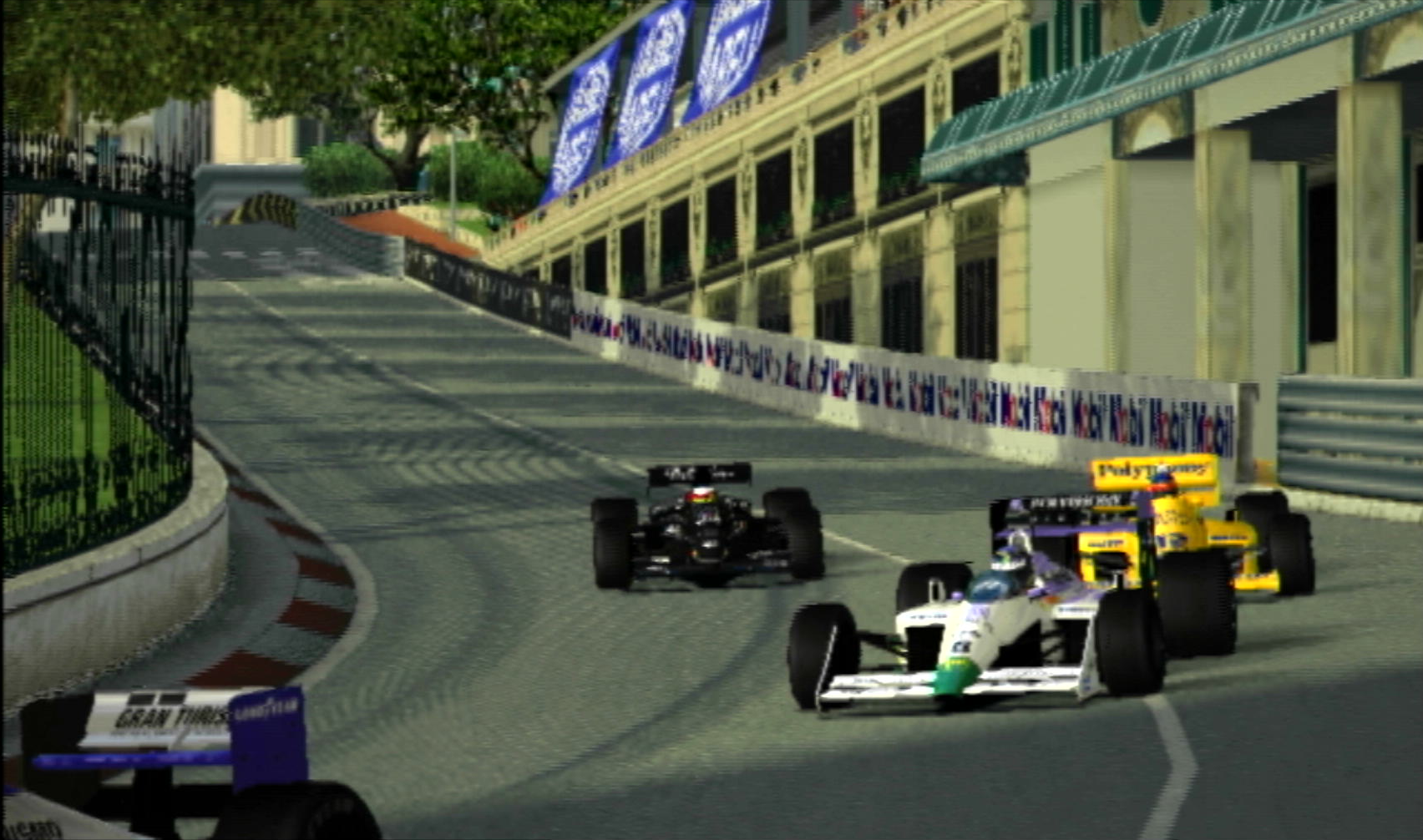
Heading into Simulation Mode and this is among the best single player campaigns the franchise has to offer. It has the best flow and ability to guide the player to the next challenge through it's prize car allocations, putting you in prime position to be prepared for when the game starts throwing faster cars your way. In doing so, it fulfilled the biggest challenge of a racing game like a Gran Turismo has in making sure that as many cars within the roster get used or have the potential to be used. It builds to those longer events using faster cars incredibly well, and understands there's a limit to how long races with only six cars on track should be. The 10-round championships in the Professional League can drag, but now they could be done in multiple game sessions since you can save the game and come back to the championship at a later time: something truly revolutionary for making late-game progression much more palatable. This is crucial in the last championship in Gran Turismo 3: initially kept as a mystery behind a nondescript question mark graphic before being revealed that Grand Prix formula cars were the new crescendo to Gran Turismo.
The game does have it's oddities and it's quirks: like a chase camera that feels a little to close to the car and doesn't swing enough for tight corners. At the same time, GT3 lacks the option for a farther out chase camera that was in the previous games. Credits for upgrading cars can be hard to come by initially, though workarounds and strategies have long since developed to where it isn't as much of an issue. On the driving physics side, I always found that the way the cars rotate on initial turn-in to be a little on the mushy side; and gave the sensation that the cars were using a steering wheel stolen from a pirate ship, though the game drives incredibly well beyond that. Some of those longer events can feel like foregone conclusions with how wide the pace gaps can be between cars to yours, but one-make races can be an absolute brawl with the ai in the best way possible given the chance. Crucially however, the nature of the late game is why Gran Turismo 3 got the nod instead of both Gran Turismo 4 and 5.
In thinking about which game from franchises with such a storied history makes the cut for BRGoF25, one of the factors I had to think about was how a game was able to maintain it's positive momentum through to the late and end game. Being able to deliver the goods wire to wire was at the top of mind when it came to Gran Turismo in particular.
Though the introduction of the 24 Hours of Le Mans and the Nürburgring 24 were monumental achievements in Gran Turismo 4, the fact that it was still stuck to that six car limit for a race meant that the magic of such an event failed to land with the likelihood of a race being decided within the few hours being incredibly likely. Even with B-Spec Bob doing the heavy lifting, it felt like Polyphony went too far with what was now possible and trivialized the challenge that can exist in these races and made the late-game and cleanup a much less satisfying experience. A fully B-Spec'd 24-hour endurance race still took 9 hours to run with the race being effectively settled super early. The segregation that took place within Gran Turismo 5 between the A-Spec and B-Spec races meant that there was now much more busy work and grinding to be done to ensure that your ai drivers could be competent for those later endurance races. It significantly padded game time and effort needed to try and 100% the game, while you still had to do the exact same 24-hour endurance events fully on your own or with some friends in the A-Spec side of the campaign. It would prove too much with the additional barrier of the experience and leveling structure to make finishing GT5 truly enjoyable by the end, as much as the login multiplier tried to alleviate those issues.
Gran Turismo 3 didn't go as far as the two games that followed in terms of the investment required, and perhaps found that tipping point before the end-game would start dragging it's feet. GT4 and GT5 suffered late with the slog to get across the finish line in their own ways and showed what the way forward could be in both regards to make sure those mistakes don't happen again. The thing is with that is Polyphony Digital hasn't tried to tackle those issues head-on since; even though the potential for a contemporary GT campaign that combines the flow and progression that makes GT3 so special with the scale and B-Spec integration of later titles feels much more feasible.
But through it all, Gran Turismo maintains it's status as the bar for racing games across the spectrum and GT3 set an unbelievable standard for those to follow. They nailed one of the formulas for making a racing game that's also a fantastic video game while others couldn't get it quite right at that time. Gran Turismo 3 was particularly special as the whole experience felt fully fleshed out and showed what was going to be in store for gaming in the new millennium. You even had some fascinating leaps forward in technology like LAN multiplayer on consoles before online play was truly feasible, and custom action montages set to the music during a race replay fully curated by the game.
Polyphony Digital threw everything they could at Gran Turismo 3 to make it everything they visioned it to be, and the industry stopped and looked on in wonder as an impossible standard to reach was raised ever higher.
Up next on BRGoF25: Considering how much it's come up on Bluesky recently, I guess it's time to finally talk about The Best Racing Game huh?