Full Game Teardown: Screamer
A better racing game genre is possible, and it starts with Screamer.

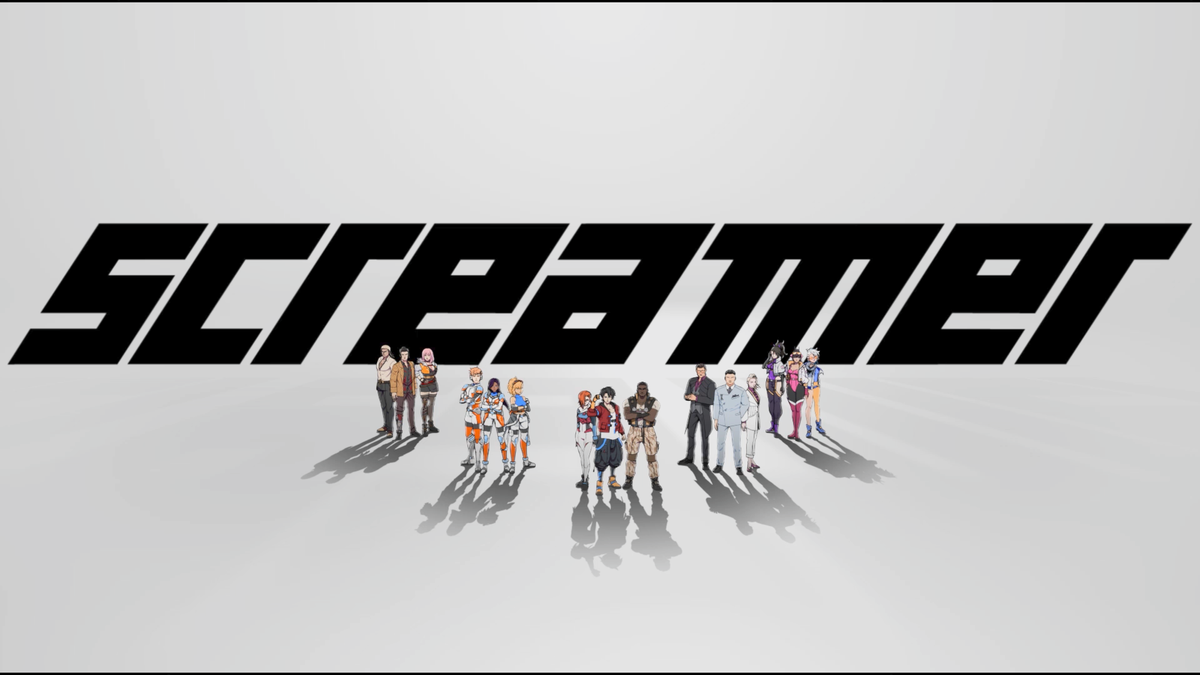
Welcome to a Full Game Teardown. My review of the latest offerings in the racing game world.
The world of racing games is always moving, growing and evolving. There is always so much in store and new adventures to be had whenever a newcomer comes up to bat regardless of it being a sequel in a long running franchise, or a wholly new and original release. And it will be always worth finding out of it's a good video game as well as being a good racing game and discover where it can grow and improve.
Today, we are looking at the Playstation 5 and PC release of Screamer.
Disclaimer: This is your Spoiler Warning and Content Warning, even if I don't divulge specifics. Screamer is rated M for Mature for a reason and it's Story Mode tackles heavy topics including grief & loss, suicide, abuse and post-traumatic stress disorders.
Thirty-two years of history within the racing game genre goes through Milan, Italy; but you'd be remiss if you never noticed it happening as we entered the second quarter of the 21st century. It's a history of dependability, reliability, of putting in the work and making largely licensed racing games that get on base. To get on base is to ensure survival, to be adaptable as the market changes and new challenges arise. To get on base is to know what you are capable of, but also to have the potential to do more at a moment's notice and rise to the occasion put before you.
Put before Milestone in the middle of the 2020s was a chance to rise to the moment. This decade has been the home of their best and most successful work within their history, with the Ride franchise and their Hot Wheels Unleashed games among the best the genre has seen in the last ten years and are watershed moments for the developer that has put themselves into the spotlight. This was the moment to try and swing for the fences when you're so far ahead in the pitch count that you know you were getting served a meatball across the plate. This was the moment where you get to have your dessert after finishing your vegetables. This was the moment to break free from routine, dream higher and chase the life you've always wanted to live.
It is not every day a major developer, let alone a racing game developer, gets to go for a victory lap and make a game that is a pure passion project first. But Milestone earned this. Milestone earned the chance to make a new Screamer, and made the most of a once in a lifetime opportunity.
The original Screamer was itself an important racing game as it was among those first steps for a fully polygonal and rendered 3D racing games to get out of the arcade and into the home. The idea of being able to play a game similar to Ridge Racer on your computer was a massive deal and it helped get the ball rolling for Milestone, then called Graffiti, eventually leading the Italian developer to being the quiet giant within the racing game space. Two more Screamer games immediately followed, but nearly 20 years on from Screamer Rally a follow-up couldn't just be another racing game. That early success was buoyed by it's use of 3DFX technology, but technology cannot lead the same way it once did; the game itself has to walk the walk wire to wire. For a new Screamer to be able to walk that walk, it couldn't just be a new racing game for the sake of being a new racing game.
The new Screamer goes into uncharted waters for the current big dogs in the racing game space, but it does it in full confidence in itself. It doesn't hold back on being a anime racing game in a time when the genre needed a heavy hitter to go against the grain and stand apart from the world of free roam or GT3s at Spa-Francorchamps. In standing apart it needed to have a story worth investing in, characters you wanted to see succeed over their personal struggles and external conflicts, and be full of incredible style and grace in the process. A part of that requires the act of racing and the Screamer Tournament itself to be the means for the characters to reach their desired end, or at least what the past wants to be the desired end.
A core theme of Screamer is reconciling with the past, and understanding that the person that you were in the past isn't who you are in the present and who you can be. What the past version of you thinks is best for you in the moment isn't always going to be true, especially when the past's desire is for revenge above anything else. You have new knowledge and experiences in the present, and those can provide new perspective and answers to how the past went that will further change one's judgement. It's key when the opening to Screamer has the main trio you focus on throughout the game, being Hiroshi Jackson, Róisín Garrity and Frederic Barthelemy, trying to get revenge against corpo executive Gabriel Mertens for his perceived fault in the death of their mentor Quinn.
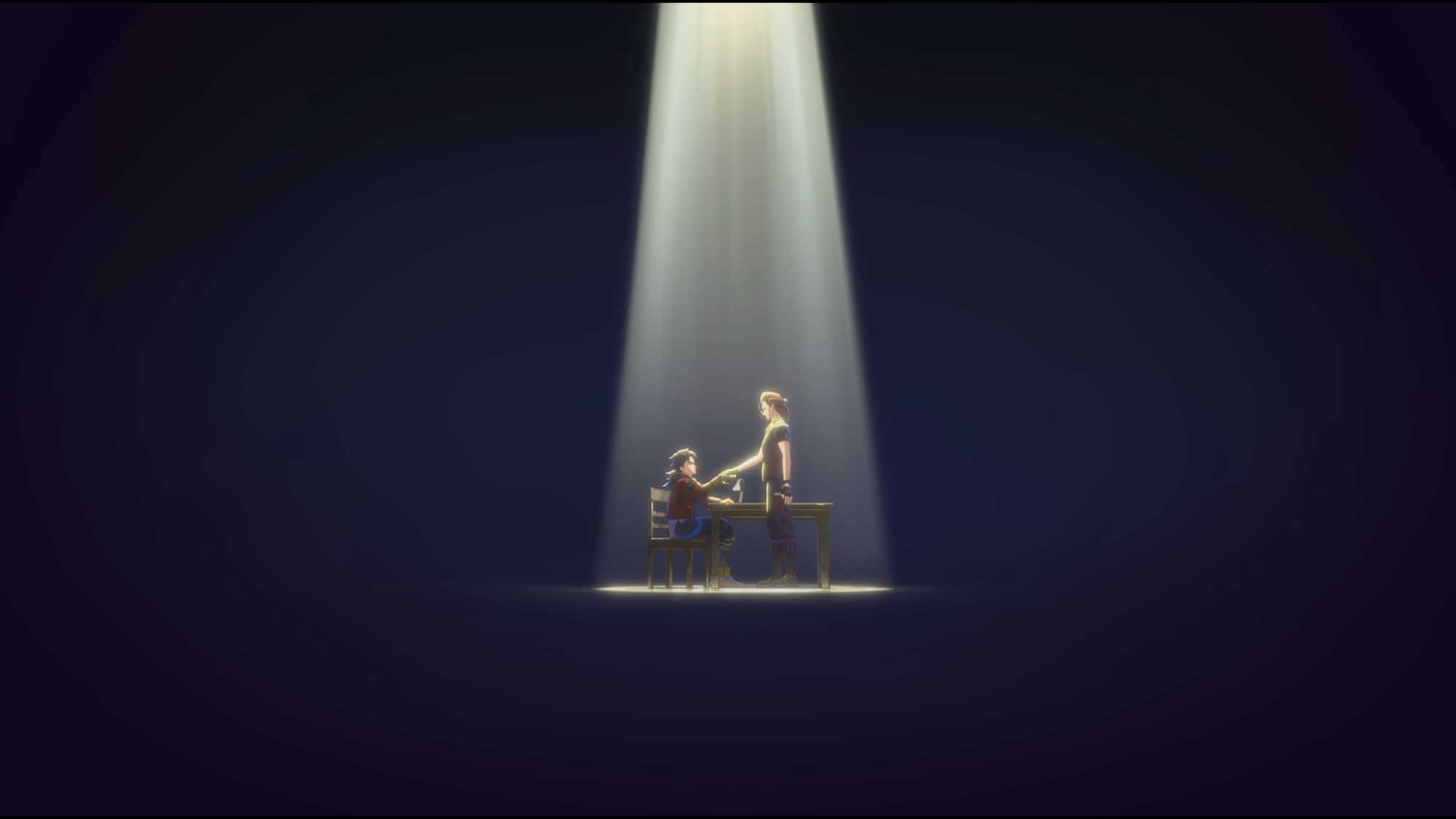
It takes time, but the Story Mode having side-missions focusing on each team's growth through the tournament does get you where you need to go in terms of understanding why a corpo would race in a Screamer Tournament, as well as why the other two major teams in Strike Force Romanda and the Jupiter Stormers are also in the tournament. They too have to reconcile with the past that directly led them to this moment and this Screamer Tournament, and how they move forward when the secrets of this tournament get revealed. There is tremendous character growth within the main characters of the story; you will believe in the better future that a lot of them want to have in their bids to get out from the shadows of the past that loom large.
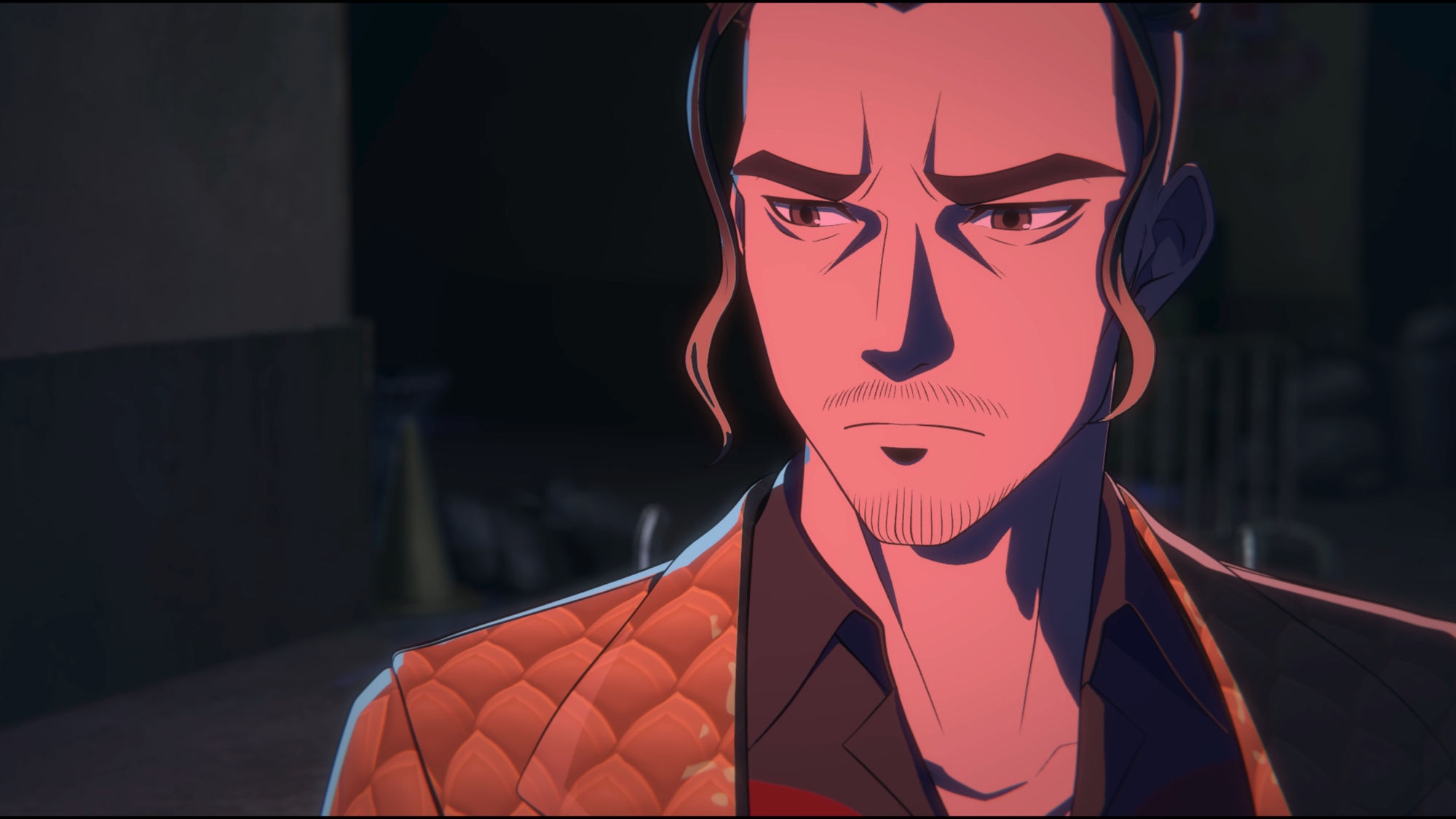
When we think of racing games, we don't think of their story unless they go out of their way to champion it: it's usually a case of having just enough of a narrative string to keep the player going along, as was the case for Need For Speed. Screamer sets the benchmark for what a story line in a racing game could, and should be. It's pacing does stumble while the side-story with the fifth and final team reaches it's satisfying conclusion, but come the closing story-arc it is all hands on deck with an anime racing game that fully embraces what it means to be an anime racing game. The last arc gets heavy, intense, and goes places prior racing games that have a story mode didn't dare to go because it was not their time and place to do so. Outside of Ridge Racer Type 4 no racing game that has a story nailed the idea of raising the stakes and having the player buy-in when the story's chickens finally came home to roost; and even then R4 wasn't in a spot to have stories this well thought out and characters this human. Once you're invested in the stories, lives of the characters, and lore of Screamer, you're seeing this through to the end with what is the best story mode and the best writing to come out of a racing game. It's writing that can match anything else on the market; a racing game did all that, and that is damn cool.
A part of the trick and a huge part of the magic of Screamer is that the form and the function of the story mode and it's actual gameplay compliment each other. The main device that gets installed on all the cars in the very opening of the story called The Echo is what allows Screamer's car combat to be possible, and the mystery of how it works gets understood and expanded upon as the story develops. Though in the arcade mode you can use the full extent of it right away and explore how using boost generated via sync then creates entropy to use in either a attacking strike or a surging overdrive that's akin to a limit break in a RPG, those only get introduced in the story as the characters develop and are put under duress by the strains of the tournament or directly by it's host Mr. A. This is a different style of car combat racing game, deriving some of it's functionality from Chrono Trigger's Active Time Battle system while still demanding the driver put in the work to ensure that the active time is able to function at all. You can't go into a race guns blazing like one would in a Burnout or a Ridge Racer; there's more going on and that needs to be acknowledged and accepted if you want to generate sync and be at the front.
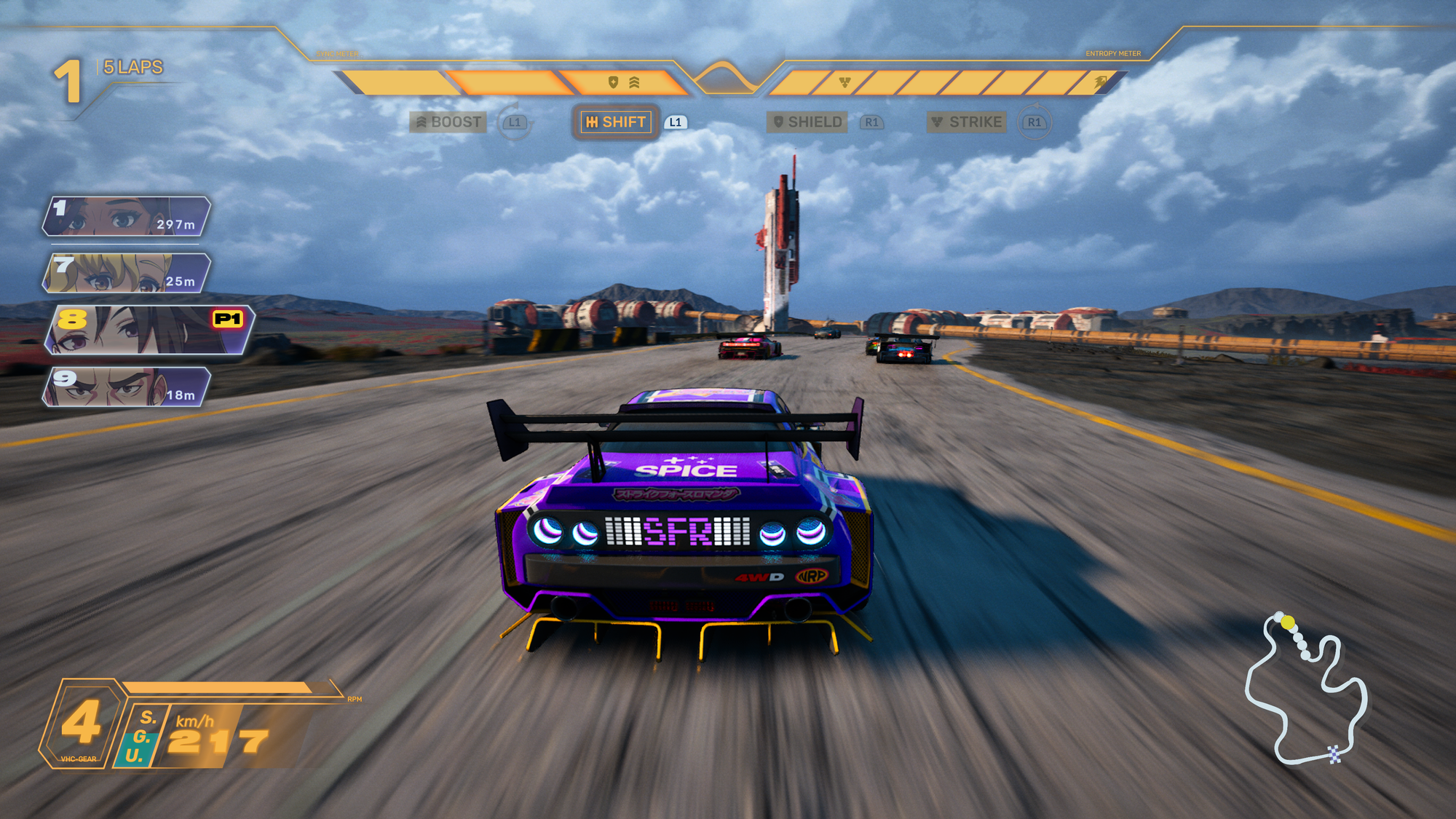
Using a twin stick system to have two separate steering strengths that can work in tandem with each other is incredibly bold, and reveals itself more as a parallel to the steering and air braking in Wipeout once you're up to speed. The normal steering is incredibly tight and longitudinally stiff, with the radius of the turning arc it produces being very long even at moderate speeds. It's good for lane changing on straightaways and some easier corners, but the second stick being a drift stick is the key to racing and survival. Using the drift stick in tandem with the normal steering is how you get through a majority of the corners while maintaining momentum, and allows you to glide through tight hairpins and the rare 90 degree corner where the ai might grind to a halt. The turning arc and radius when both the drift stick and normal steering is used is a little goofy: there is this initial shove in the direction you're drifting into before the rear steps out and the outside front tire does a lot of the turning. In that transition from that shove to the actual drift there's going to be a bit of time where the car will swing wide before it settles into the arc it wants to take around the corner. You need to slow down for corners way more than you think you should for a game with a drift stick; and the ideal corner entry requires a sharp cut to that middle apex so that you don't swing wide and hit the barrier on the outside of the corner.
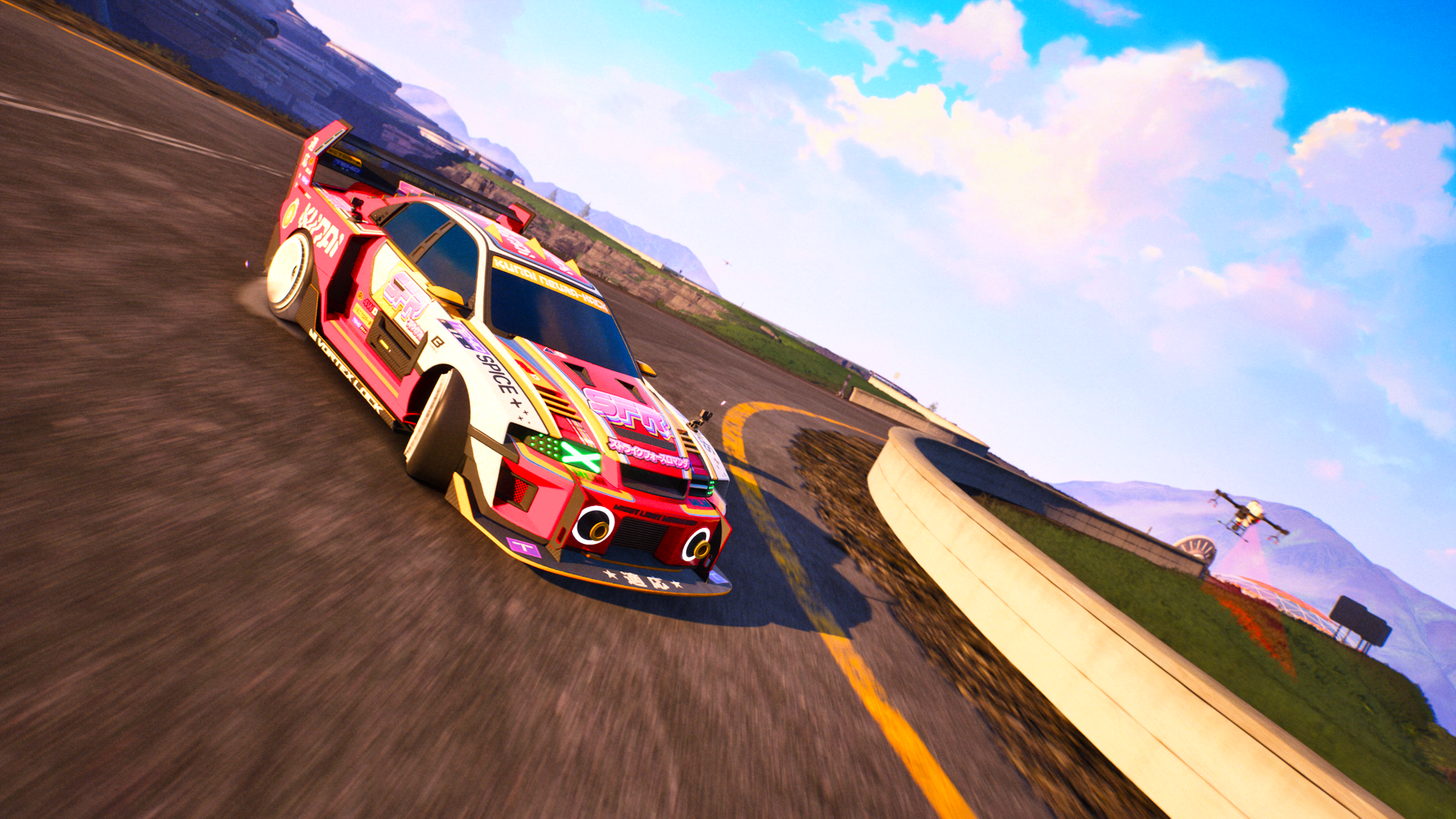
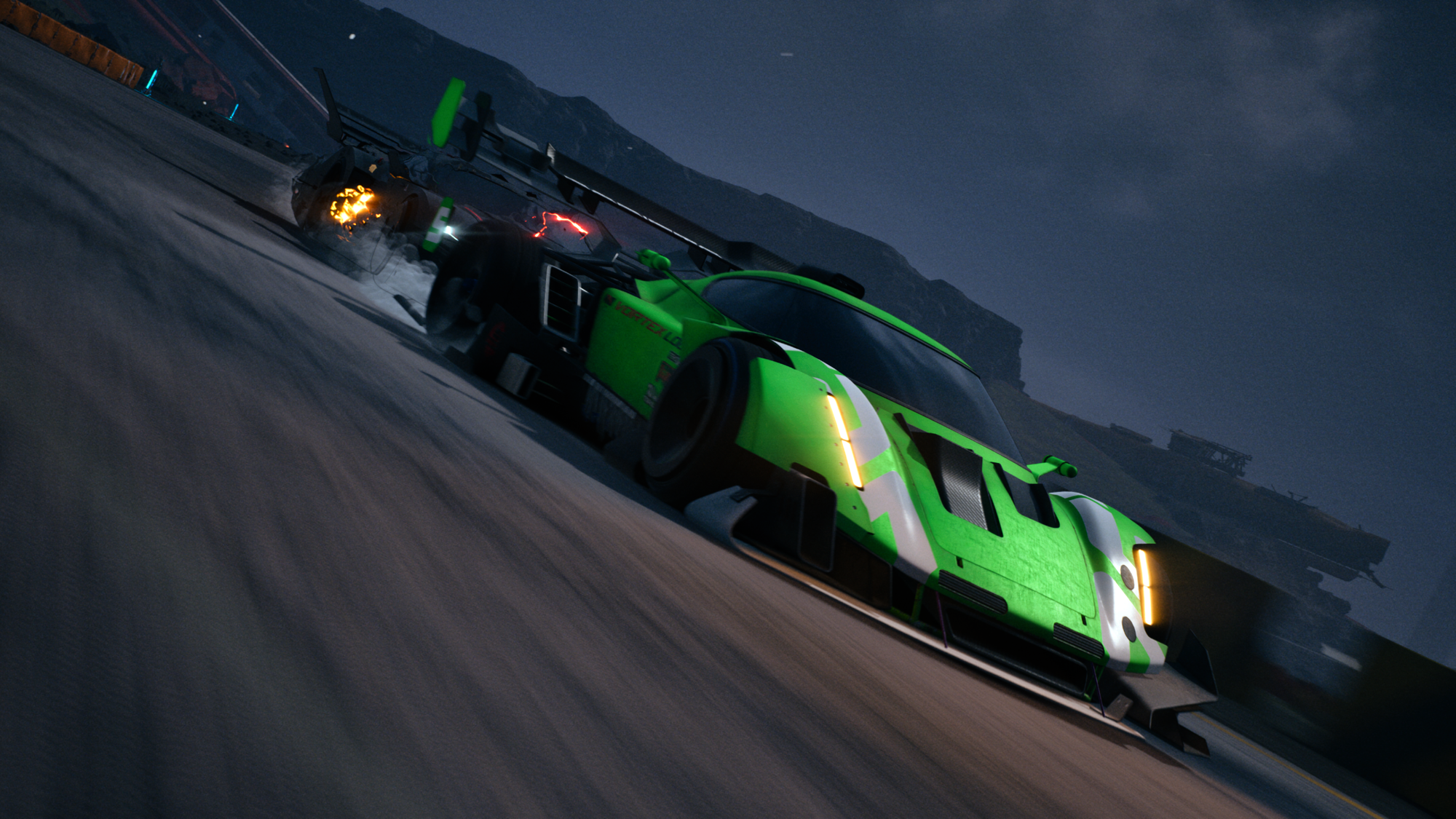
When you get dialed in, there is a real interplay happening between the two steering sticks paired with the gas and brake that you just don't see outside of the world of anti-gravity racers and when you nail a switchback section you will feel like a rock star on the other side. The big issue is getting to that point to where it clicks can take time unlike when you finally figure out how to pick up the pace in Wipeout or in F-Zero. It takes time when all of the cars have different characteristics in terms of their driving with the normal steering and the drift stick, and some have a much more pronounced kick out, swing wide effect before drifting through the corner. This was an issue in earlier builds of Screamer when you used Akemi Nomura in the story mode: her car just did not turn period which caused an artificial difficulty spike that didn't need to happen.
For a game this willing to stand out on it's own from the rest of the racing game scene, Screamer had to change the formula when it comes to combat racing. It meant that Milestone couldn't just do a tap to drift model like some of it's peers, especially when we can't go back to the perfection that was the model in Burnout 3. Why not go in a completely new direction for how we drive cars on a controller? The resulting twin stick steering system works very well when you get dialed in, and the new style of car combat about managing of offensive strikes while balancing if you want to be able to defend yourself or push forward makes racing in Screamer a dance unlike anything in the racing game genre. It's purposeful in the right way when paired with the story, and a major breath of fresh air for racing games.
That purposefulness may be the defining character trait for Screamer when you are able to take a step back and see everything that's been created. The architecture and design work put into the environments and the cars is fantastic, though for the environments that will only come to the forefront when you make it to the last region within the story mode. That's when the lighting and the physical design of the tracks go to another level and blew me away in those first events off planet. Those cars you get to race are some of the best designed and built cars in any racing game, and sets a new standard in that regard when it comes to fictional automobiles. You give designers and graphic artists a chance to build cars built to specific character themes and vibes, these are the kind of cars you hope they're going to produce. The soundtrack having set songs for each team during races works incredible well in matching their energy too, with Anaconda Corp's matte black and foreboding European muscle coupes needing that darker, grungier electronic music that would have been everywhere in British nightclubs in the early 1990s.
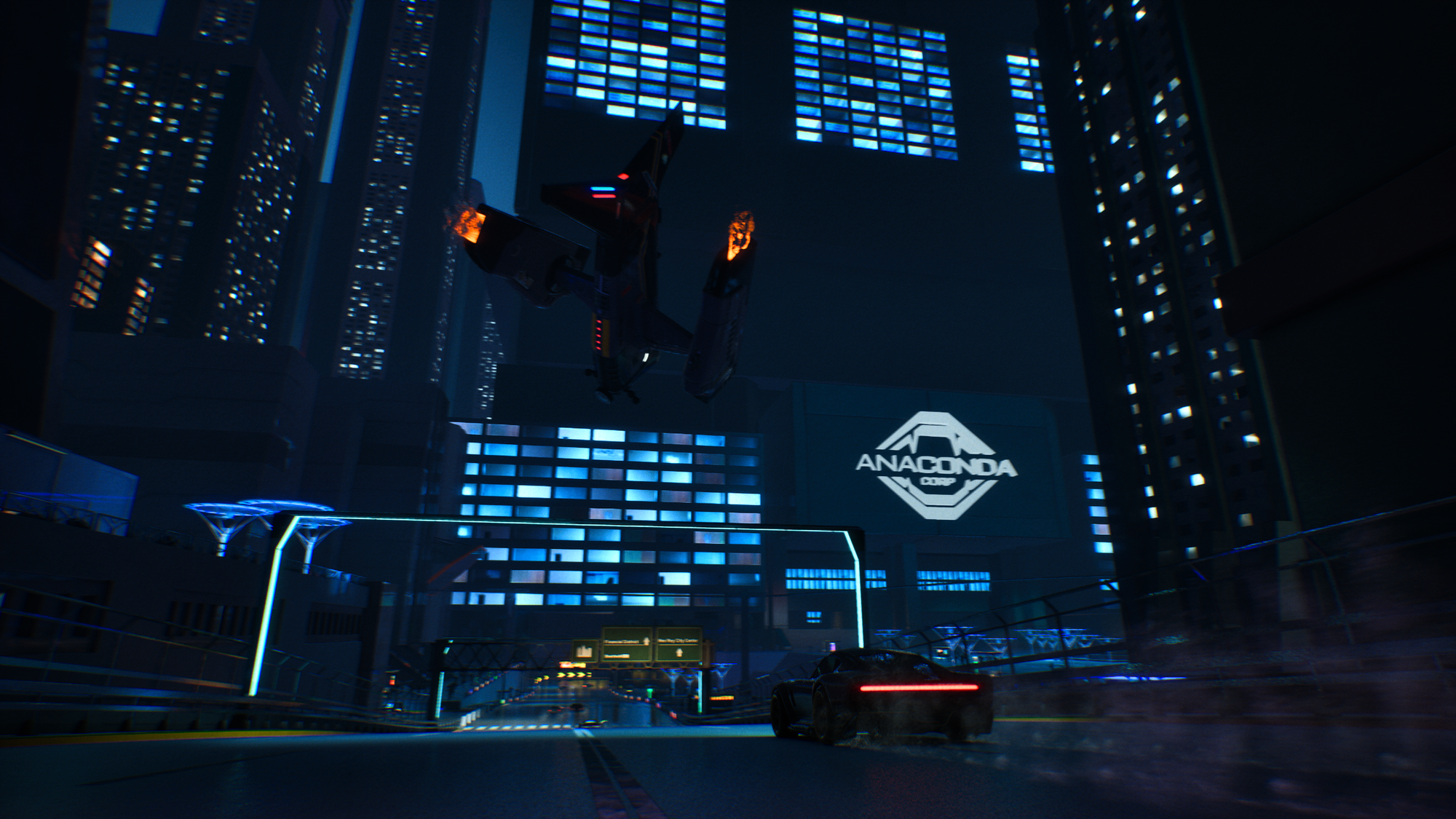
The Cyberpunk world built by Milestone was a major part of that, and gives credence to some of the design decisions made for the game too. The Echo giving justification of how the Screamers respawn after getting taken out is just not something you would think about, and wouldn't make sense outside of such a world before revealing itself as a major part of the story. All the characters speaking in their mother tongue is important to fully let all the characters be themselves and gives a chance to hear talented voice actors that some might not normally hear, while easily being justified in a cyberpunk world with something as simple as a universal translator cyberware implant. I hope that racing game players are ready for the visual novel approach the story mode takes between races for the fully voiced acted dialogue, and I hope it gets expanded upon down the road. A racing game with multiple paths and endings with it's dialogue all in the style of a visual novel is the future, one that we already saw Codemasters flirt with in the second and third Breaking Point stories. The payoff is incredible for players that stick through a racing game that forces players to get out of their comfort zone with what they think a racing game should be.
Much of a recurring talking point within the racing game genre from the perspective of outside eyes has been how the genre has gotten stale over the last two console generations. The truth of the matter is, they're right. They're right until you look at games made by solo and indie developers who have the freedom to make what they want and see what the next generation has in store. For the big name developers, the branching paths and through lines that have flowed through the genre began have resulted in major names and releases either being a free roam racing game trying to be too many things to too many people, or the main thing to do in a realistic setting being race GT3 cars at Spa-Francorchamps or Monza. There is so much more room for the racing game genre, especially a racing game genre that can feel like it more naturally fits with the greater video game ecosystem.
Screamer is a look through the magic mirror at a healthier racing genre brought forth by a developer that knows what it can do if forced to follow those more obvious paths. Milestone used that knowledge to get on base in the right places in a racing game unlike any other on the market. A racing game that has gay characters where it's just a part of who they are and a normal part of life. A racing game that has an incredible suite of bonus content to check out once you're done on track either in the story mode, split screen multiplayer, online, or doing a score attack arcade event. A racing game that uses it's influences to support the story it wants to tell, rather than be the entire character of the game itself. A racing game like Screamer is unique in this world, and should be championed for daring to try.
But Milestone did more than try with Screamer, they put their entire heart and soul to bring back a name that means everything to them and their history. They swung at the meatball slid across the plate, and hit it out of the park.
Now go and play it before it becomes a curiosity for content creators to do contrived video essays about in five years. Make it more than a cult icon, make it an icon of a better racing game genre. Oh, and Fermi is one of the best dogs in video games. A racing game did that too.
Screamer can be found on Steam, the Epic Games Store, and the PlayStation Store.
And for an additional perspective on Screamer's story and in particular Róisín Garrity, check out this piece from friend of The Powerhouse Roadie/HootOS.