Minkara #1: The harness that rights a wrong.
To learn that a company made a harness to revert that process to resemble what is raced on Sundays before paddle shifts became the norm caught me by surprise.

Minkara is a Japanese social media website that is fully dedicated to the automobile. It's primary focus is allowing people to share their stories, experience, and knowledge with the car that they own and have that available to other people, using the website's blogging capabilities and thorough sorting and filtering capabilities for brands and types of parts. If you have a JDM car in The West and are wanting an additional resource for information and parts review, there are few better places to go than the website who's title roughly translates to Everyone's Car Life.
But I don't read, write or speak Japanese and rely on translators for information while still ordering and installing parts from abroad for my JDM car: a 2001 Subaru Legacy Blitzen. The real Minkara has been invaluable to me, but sometimes even it's users with a Legacy B4 like mine don't quite give the full story of what I'm looking for in terms of parts information or maintenance tips. To get to this point with a part I had never seen before gave me the feeling that I should help others in the same way they've helped me.
And that is exactly the case with this first blog post, when I picked up a interesting part off of Yahoo Auctions via proxy-buying service Buyee.
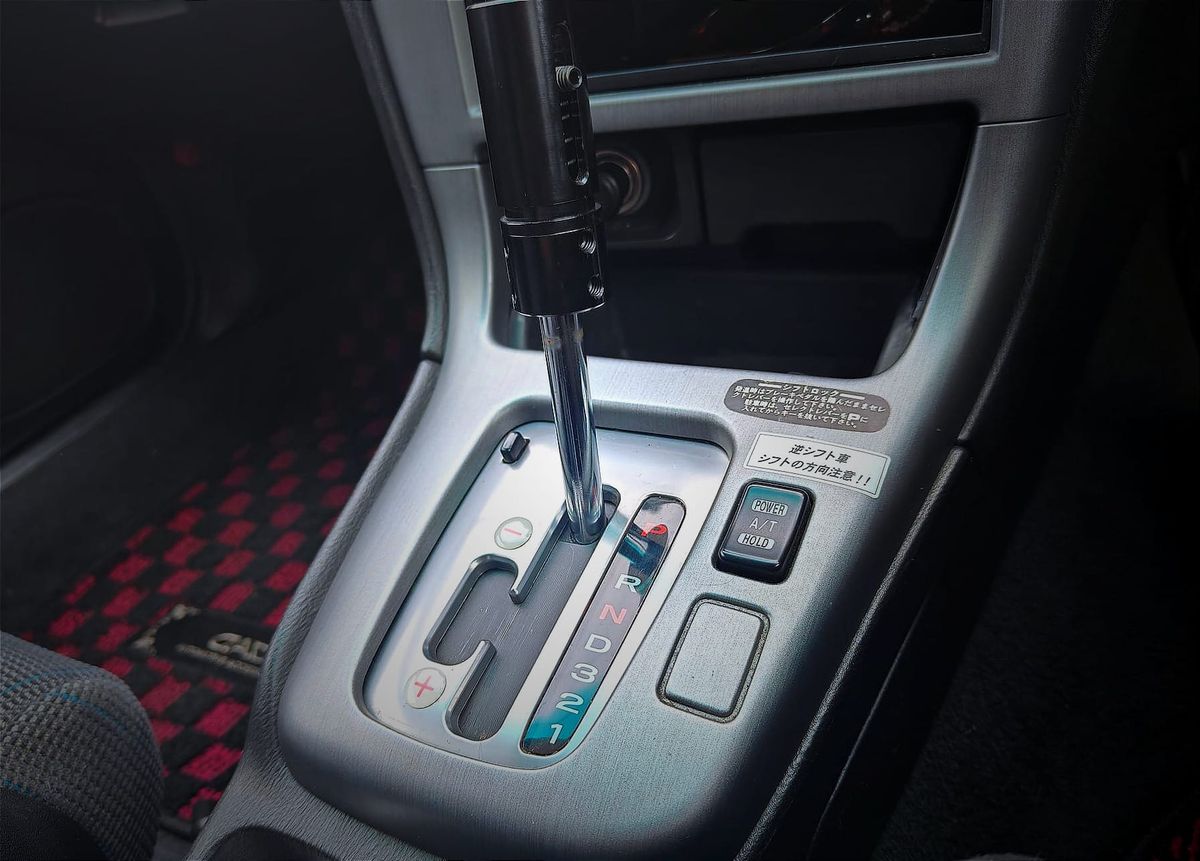
I had never heard of this part before seeing it on a Yahoo Japan auctions listing, and knew I had to have it. It fixes one of the few passive complaints I have with the third generation Subaru Legacy; being that the manual shifting mode on the upgraded 4EAT automatic transmission has it's shift lever move in the opposite direction compared to contemporary racing sequential gearboxes. You push forward on the shift lever, it gears up, and pull backwards to gear back down. To learn that a company made a harness to revert that process to resemble what is raced on Sundays before paddle shifts became the norm caught me by surprise.
It was made by DCUATRO, a company that is a part of the greater umbrella of companies under PLOT. While PLOT has largely become a company focused on motorcycles and more outdoor-oriented parts and experiences, they still have a few brands focusing on more contemporary JDM car culture parts which includes NEOPLOT: known for lightweight engine pulleys and some interior parts and pieces. DCUATRO was most well known for their aftermarket parts for the Mazda MX-5 Miata, including a full catalogue of aero parts for the first generation of the Eunos Roadster, and are still active with underbody aero deflectors for a wide variety of applications as well as aftermarket intakes and mirrors for Toyota vans.
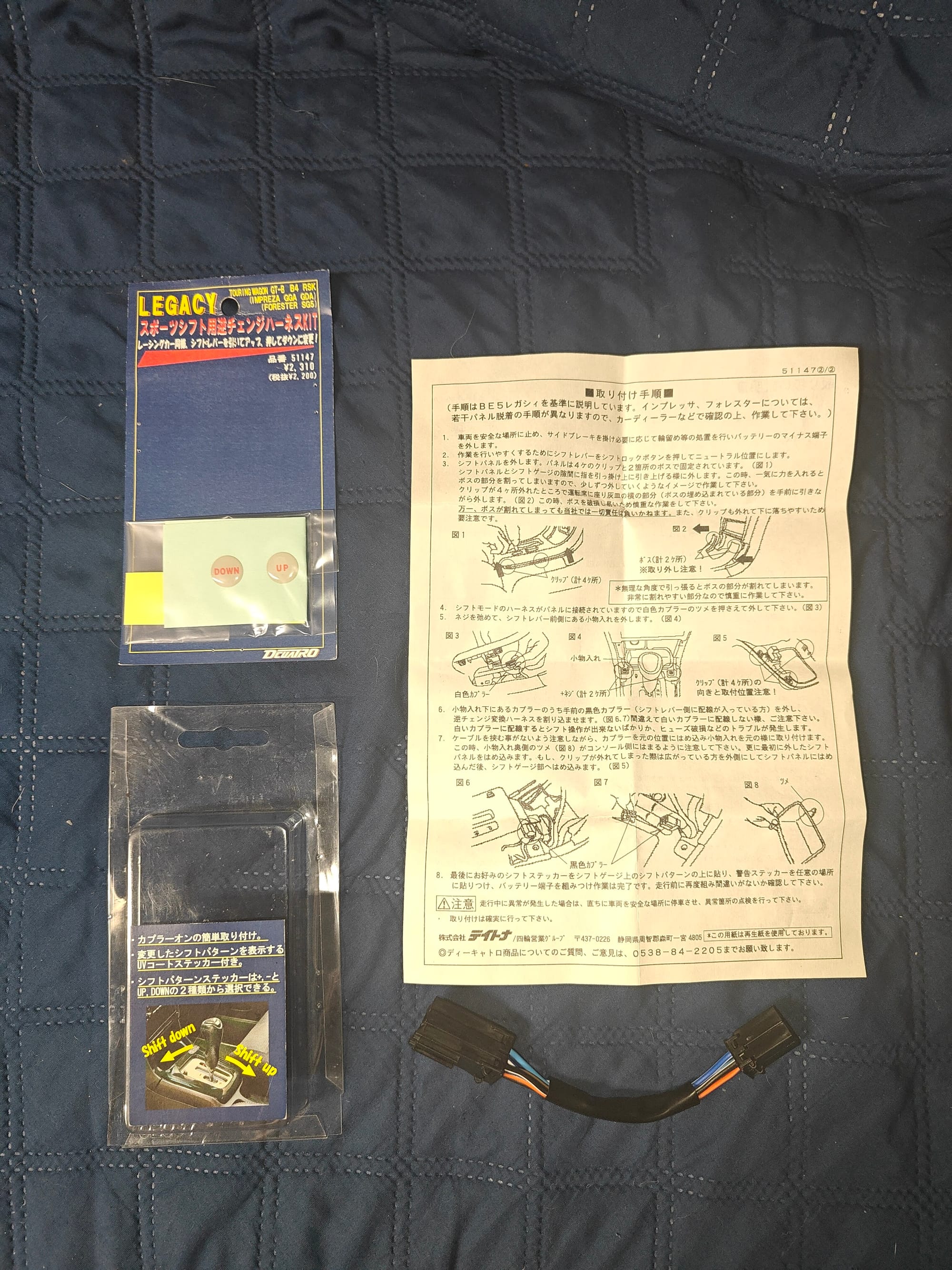
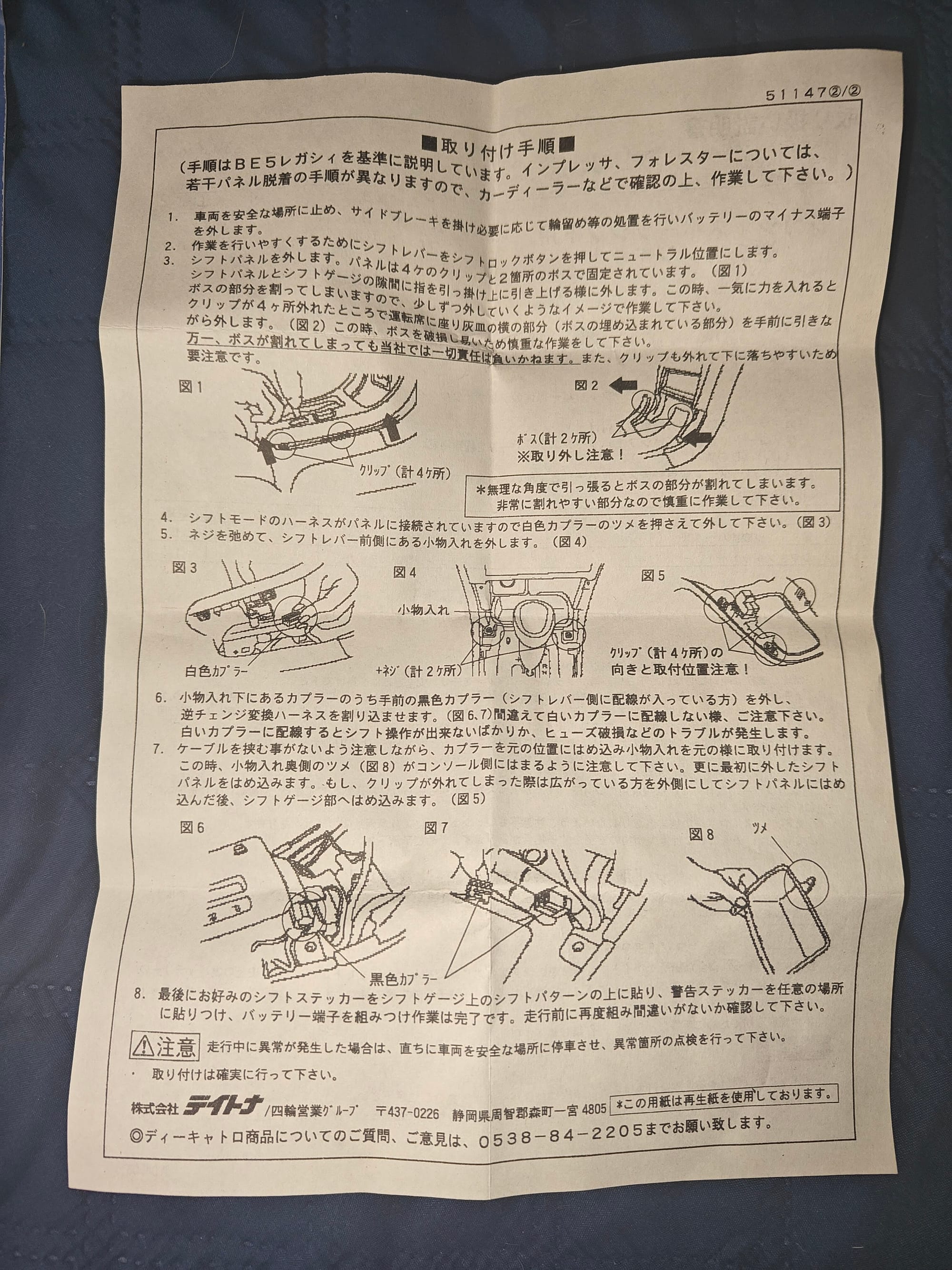

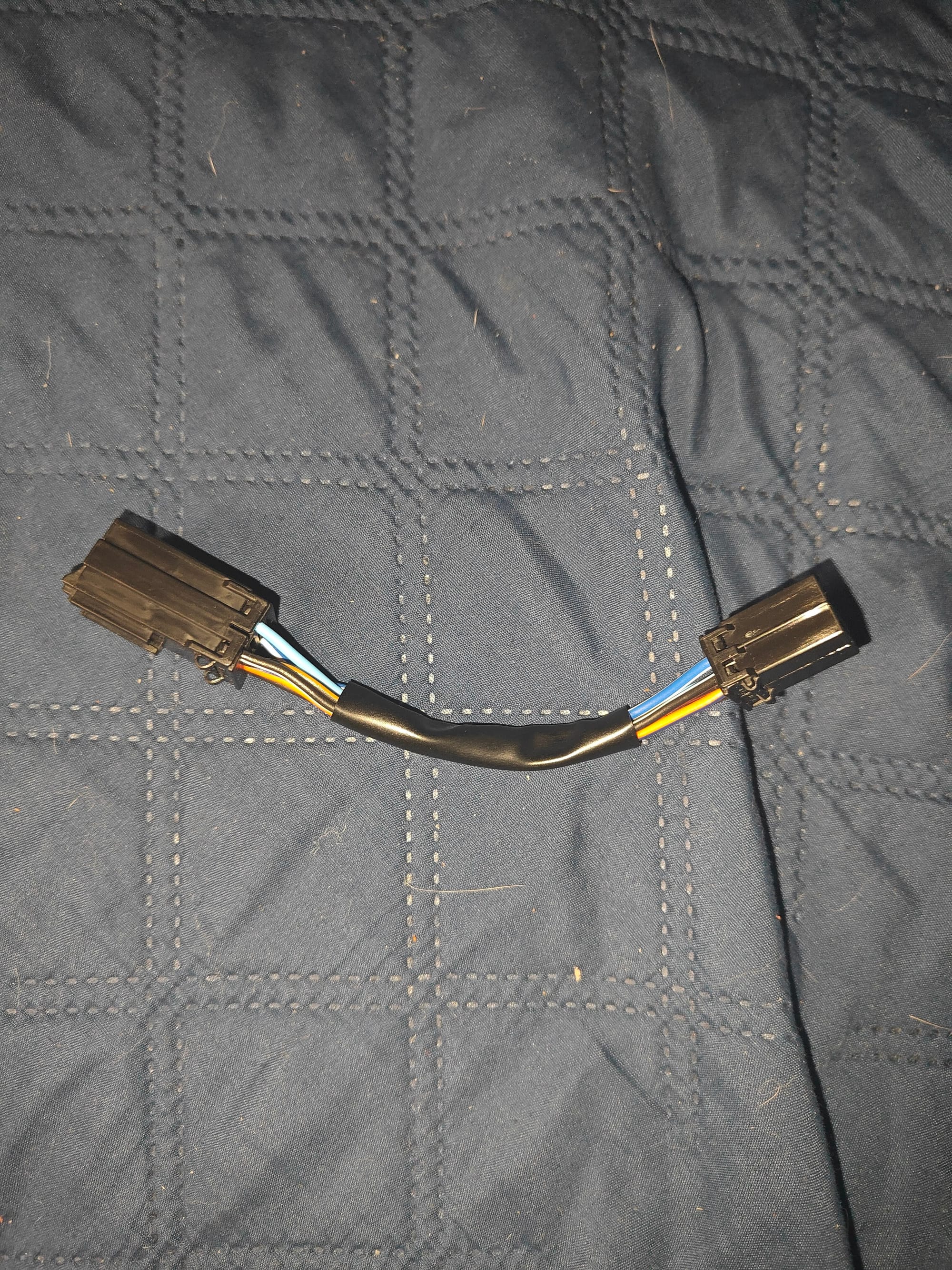
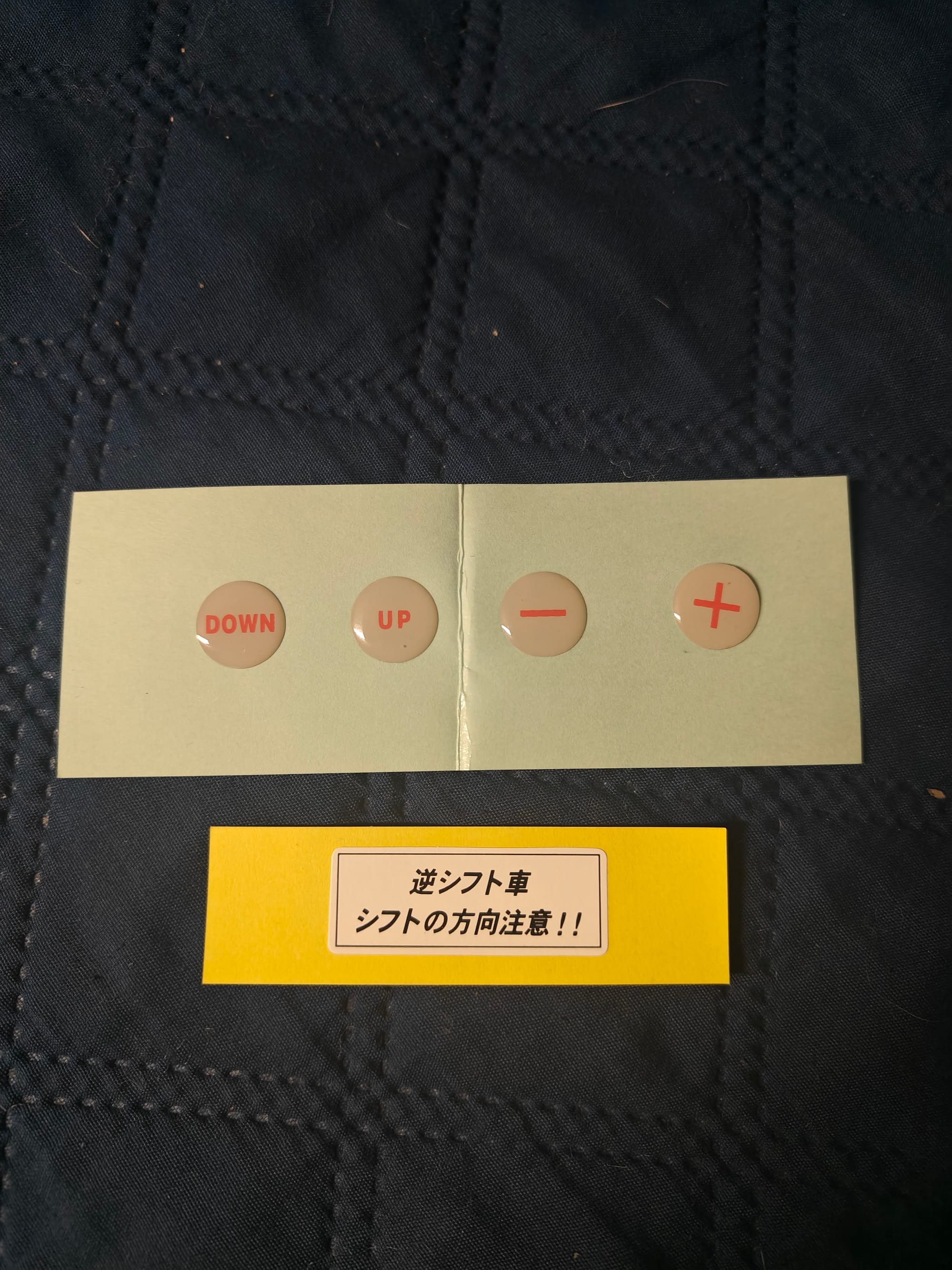
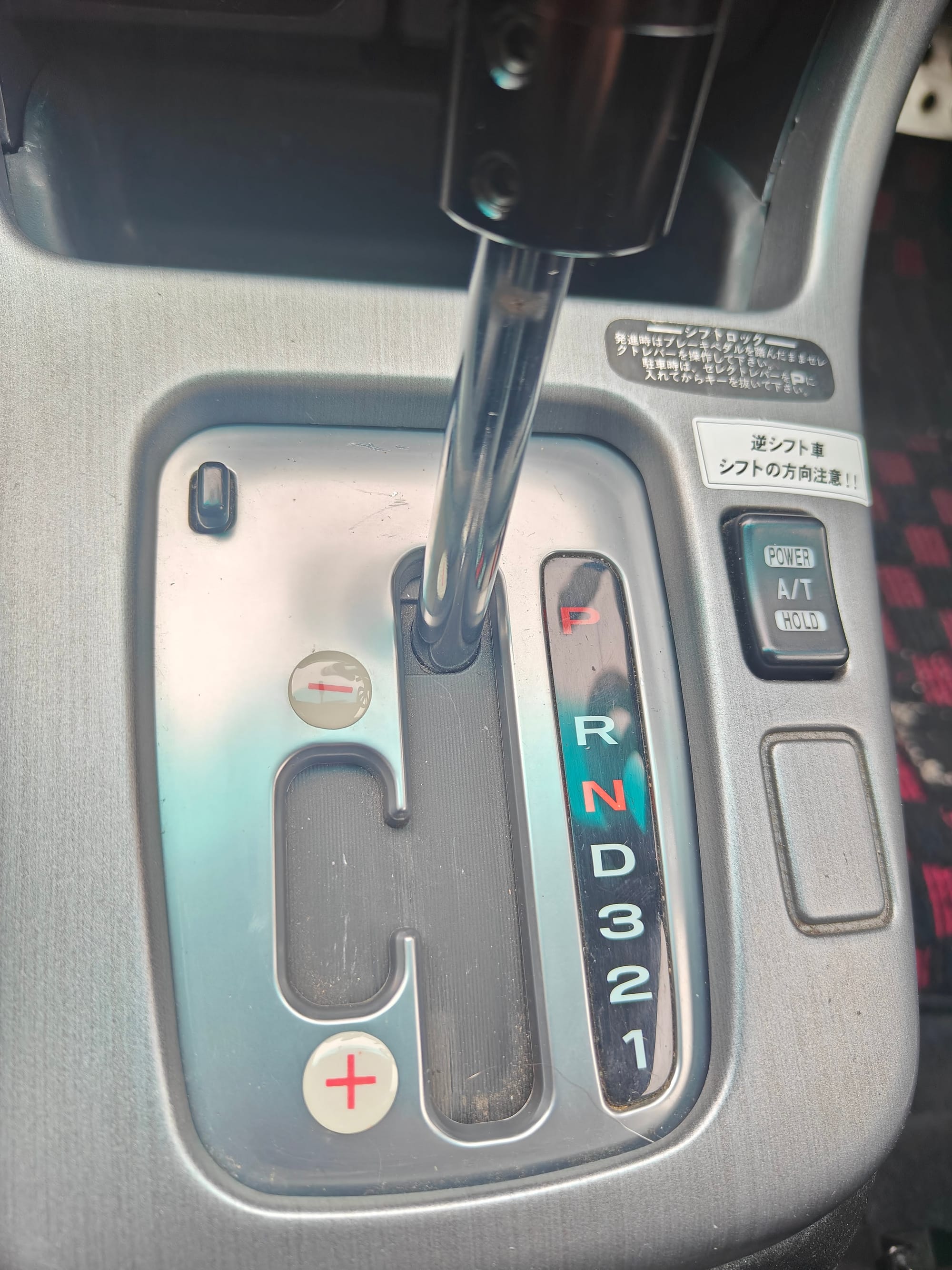
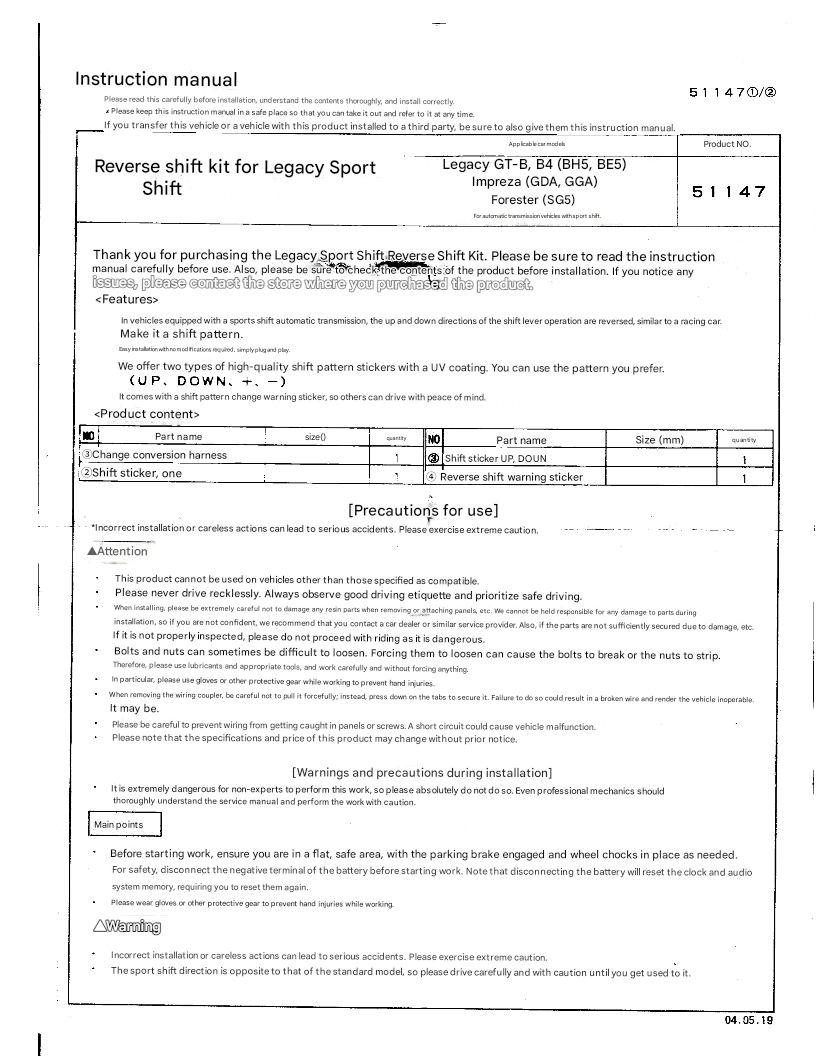
The DCUATRO Sport Shift Harness Kit has long since been discontinued to when it would have been in demand twenty years ago, and had variants to fit both the third generation Subaru Legacy, as well as the fourth generation. This harness, part number 51147, is also compatible with the second generation Subaru Forester and the bugeye-styled Subaru Imprezas that featured the same transmission. In the kit is the 6 pin harness, instructions, and two sets of UV-resistant stickers meant to go above the plus and minus signs on the shift lever. One set of stickers has plus and minus signs and the other says up and down; also included is a bonus sticker that says Reverse shift car, Pay attention to the shift lever direction!!
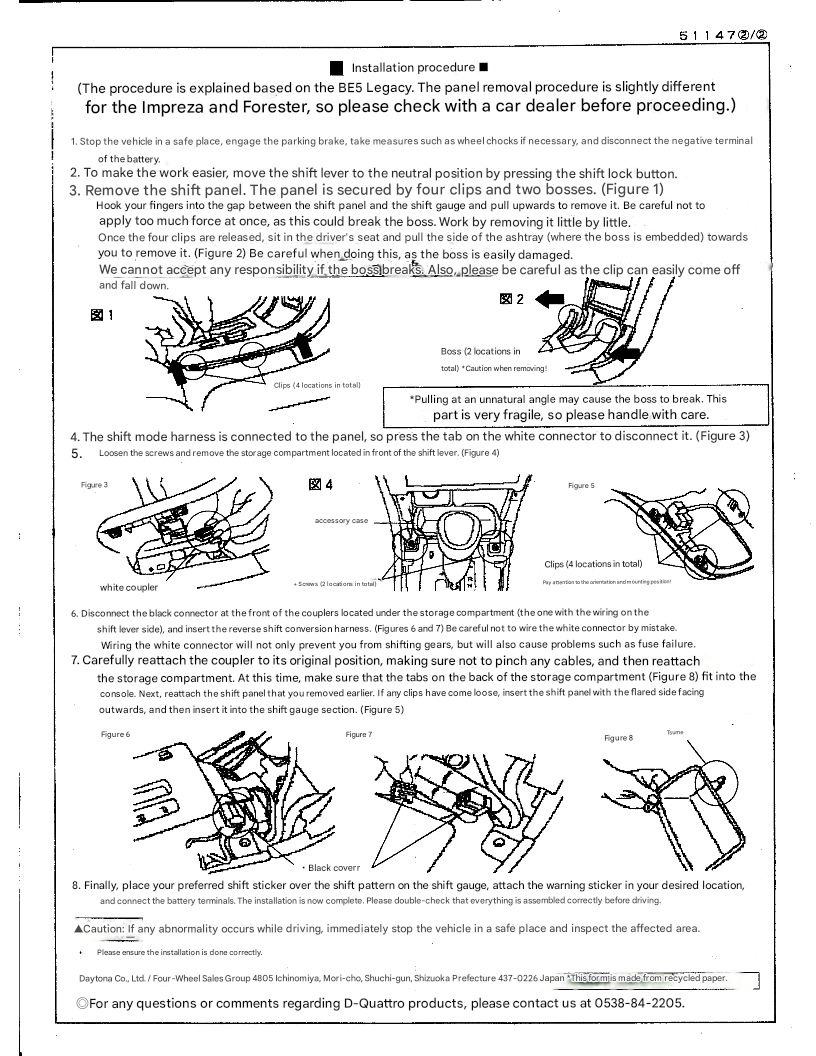
Installation is about as straightforward it can be for a pre-built harness that just clips into an existing harness. It should take between ten and thirty minutes to install, as was the case for those before me who installed it on their cars and talked about it on Minkara.
- Disconnect the battery if you are concerned about shorting a wire or blowing up fuses.
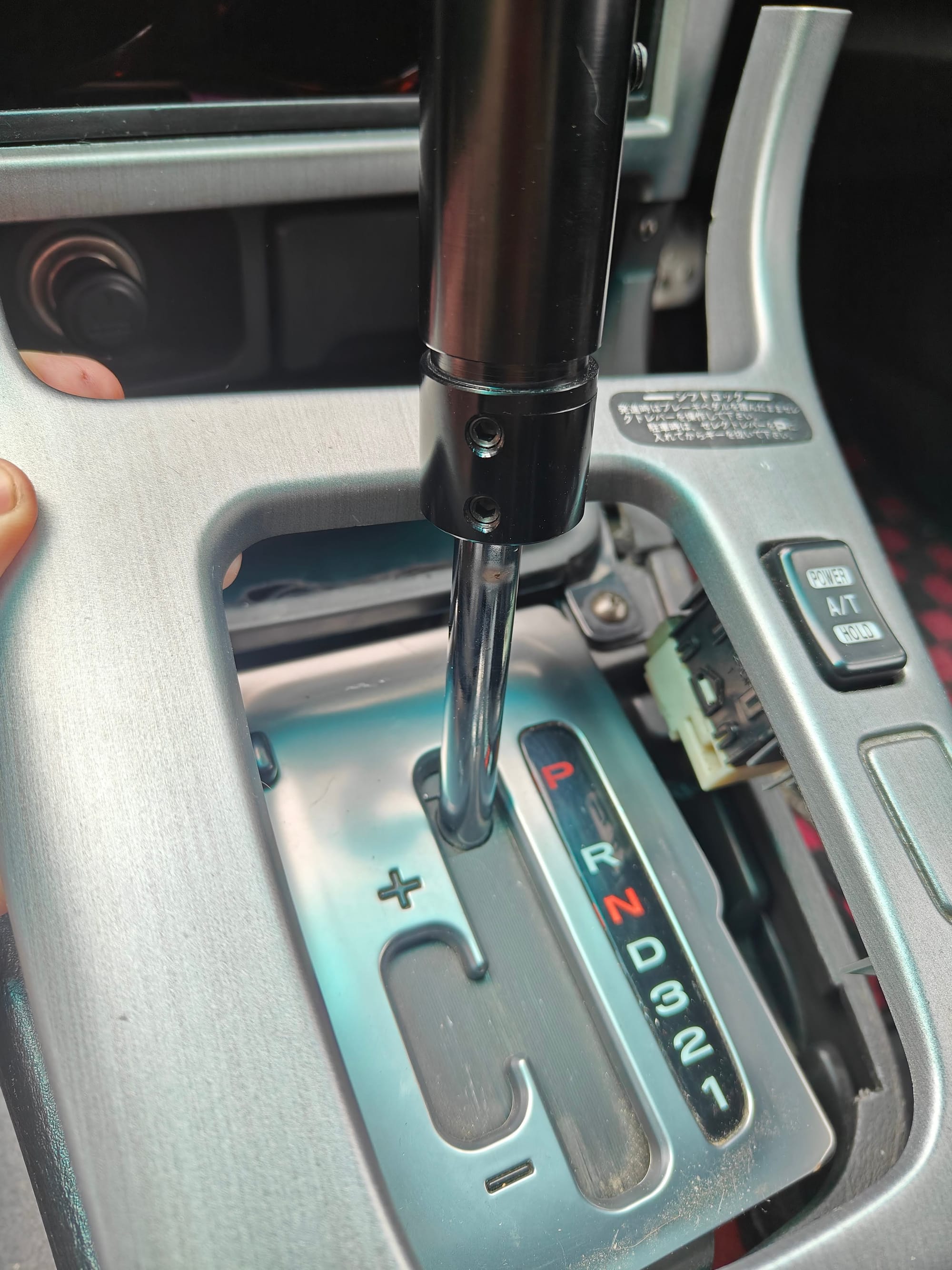
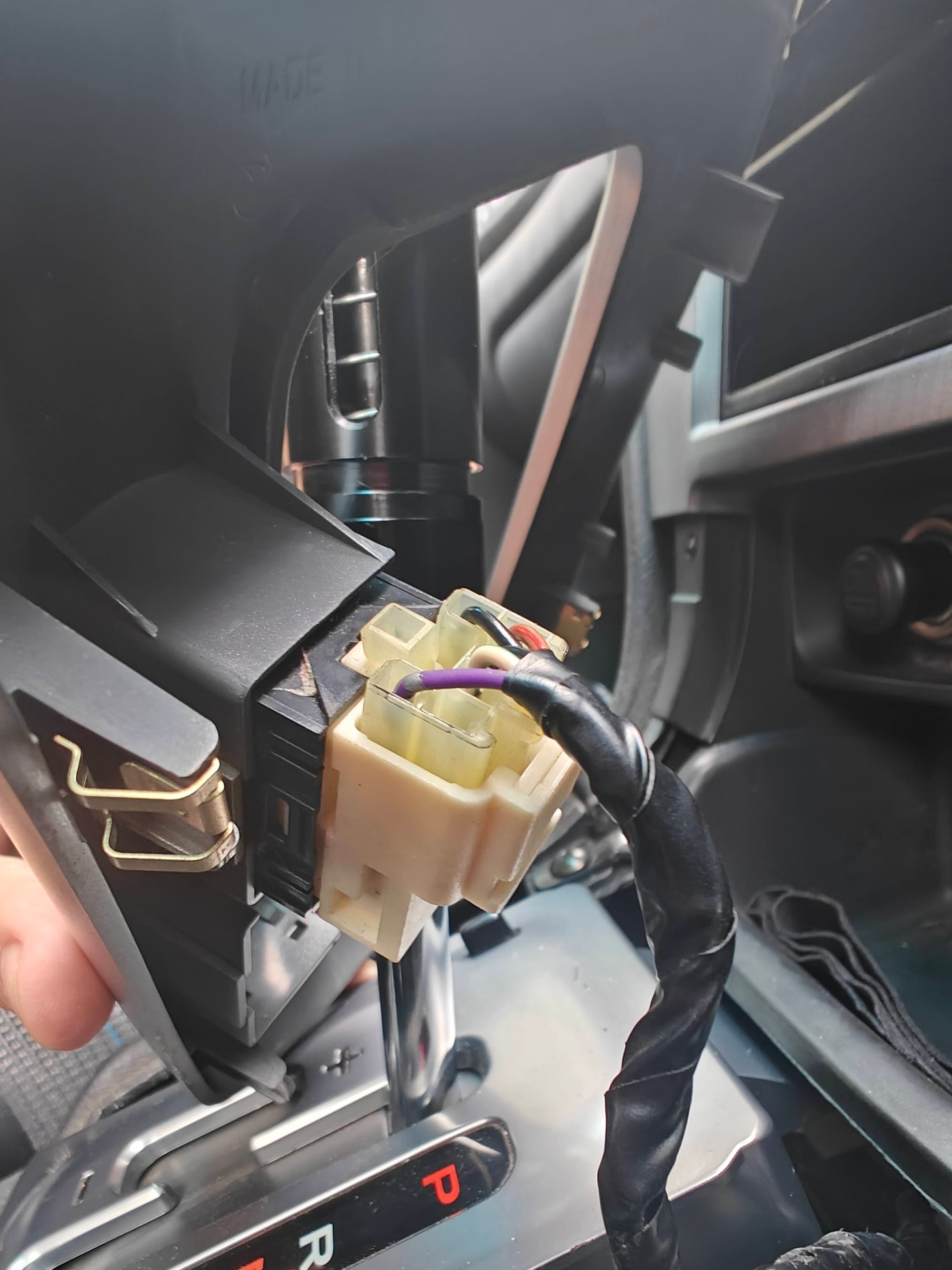
- Using either your hands or a plastic panel pulling wedge, pull out the cover for the shifter and disconnect the harness for the shift mode harness. If you have issues getting the cover out of the way, move the shift lever out of park to give a bit more space.
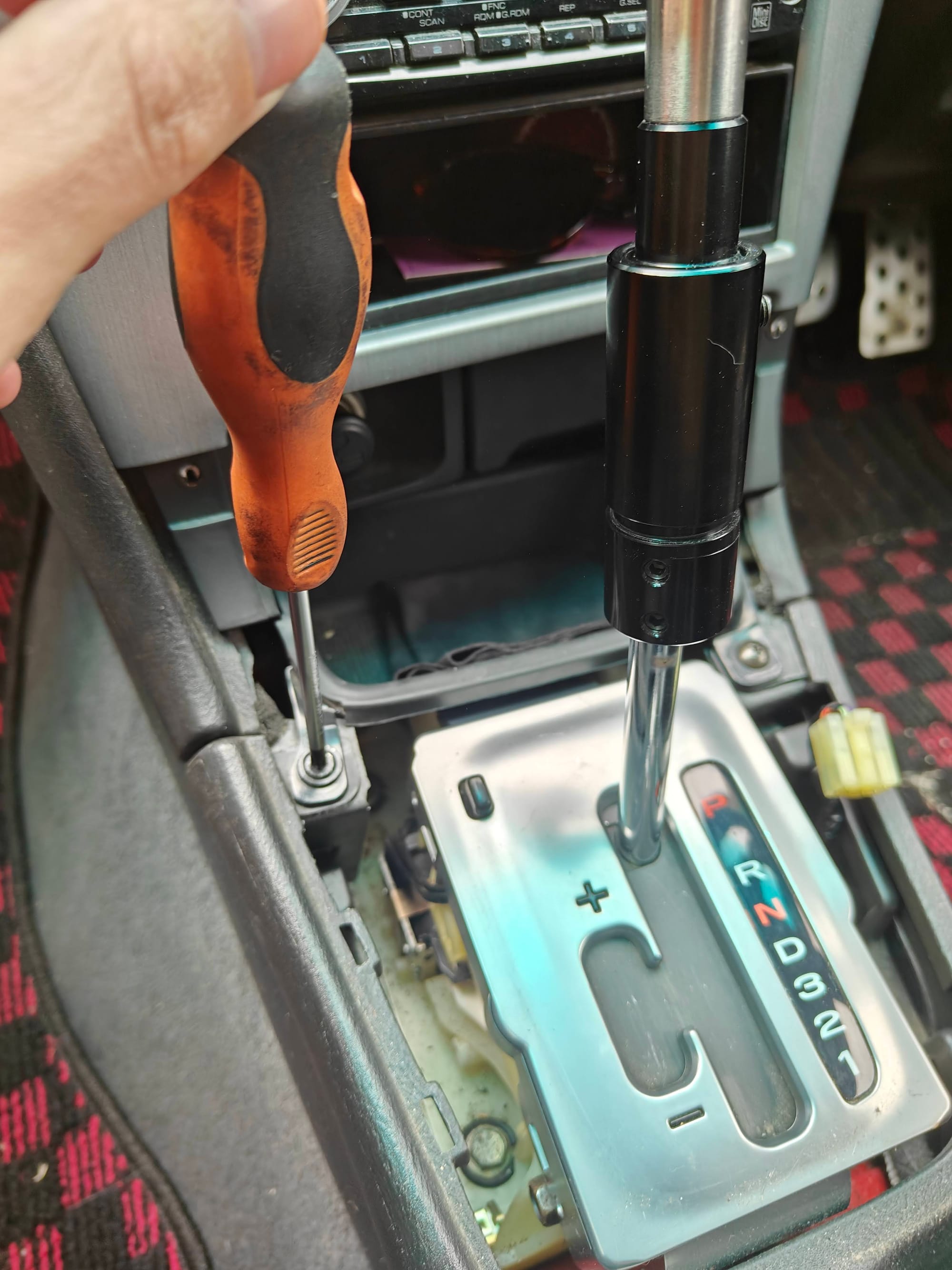
- Unscrew the two phillips head screws holding in the cubby in front of the shifter and pull it up and out.
- In front of the gear shift mechanism on the plastic bulkhead is two plugs, one is black and one is white. Disconnect the black one. Do not touch the white one.
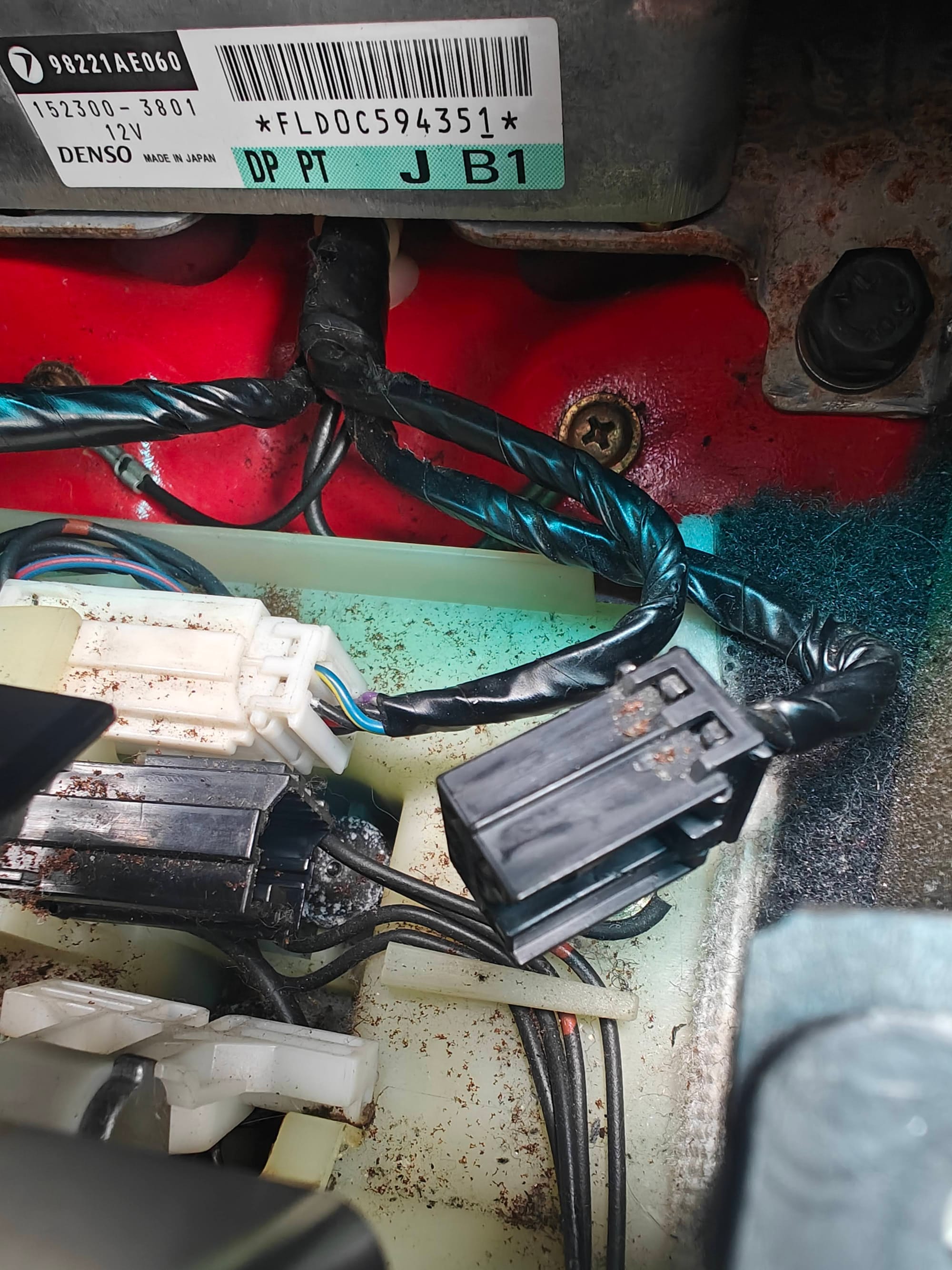
- Install the new piece into the factory black connectors and try and tuck it away where wires won't be pinching onto themself, I put the harness agianst the wall of the plastic trim panel on the right of the shifter.
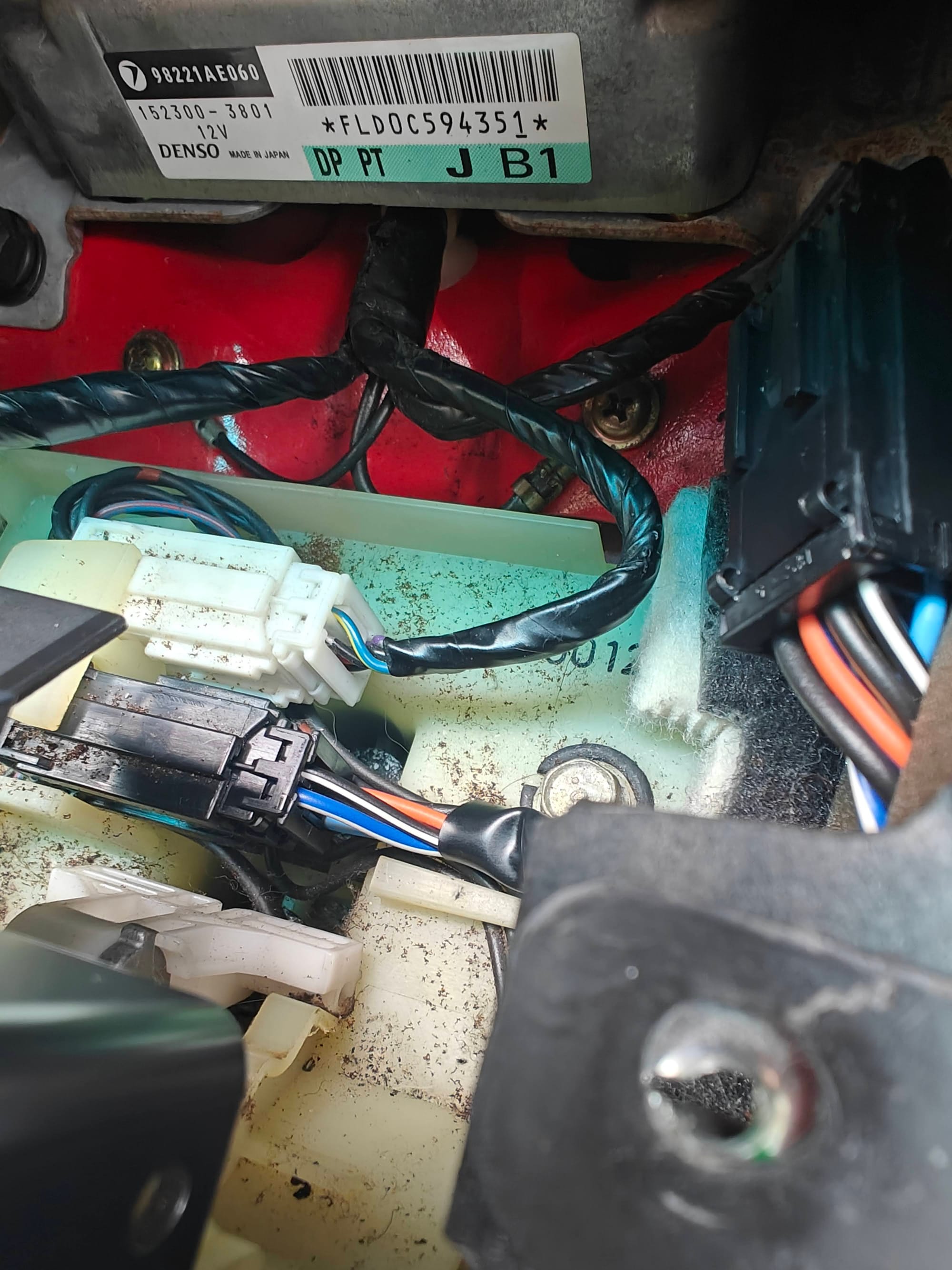
- Put the cubby back in front of the shifter, with the triangle piece in front going into the slot below the storage nook, and screw it back into place.
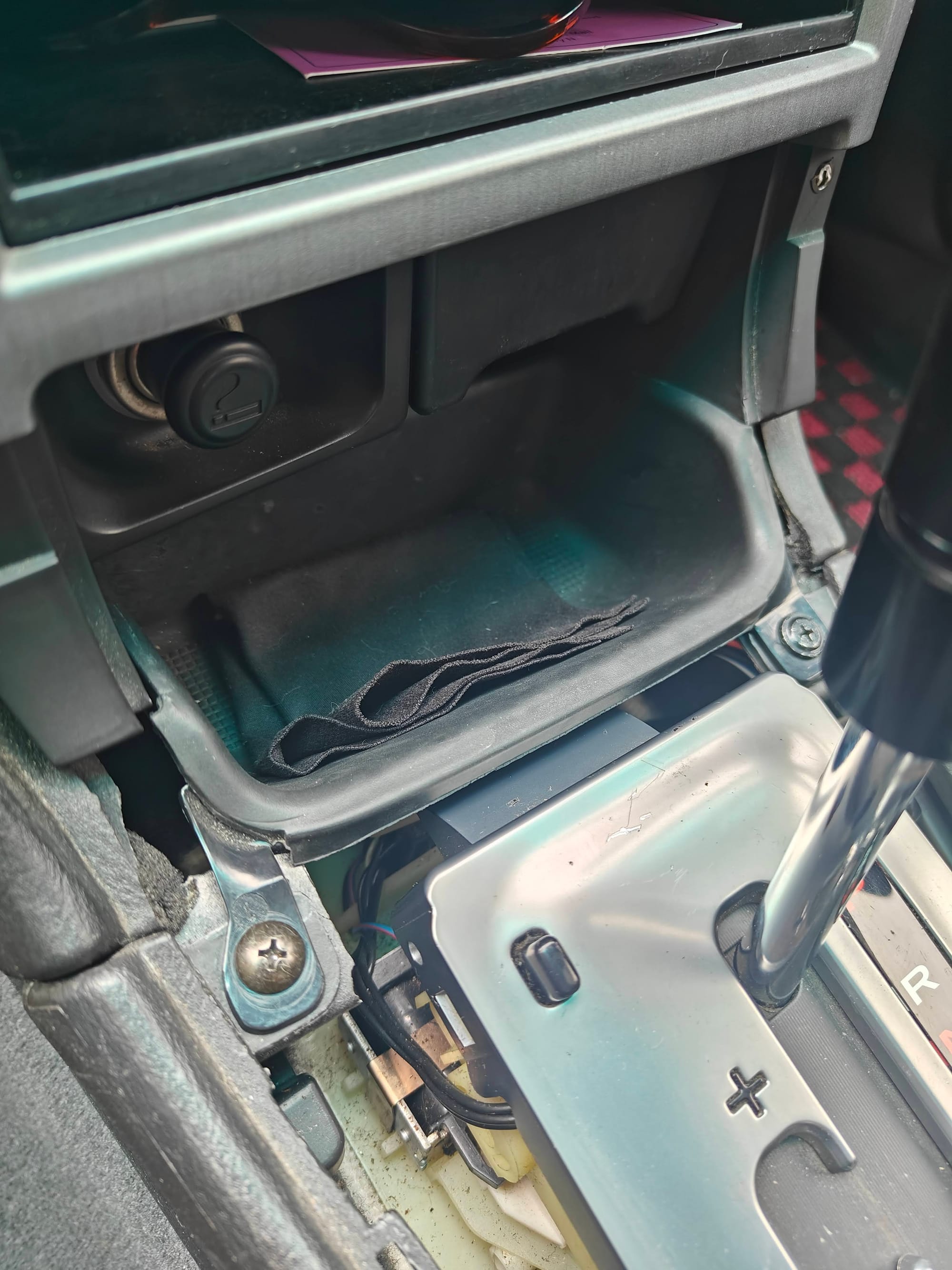
- Reconnect the harness for the shift modes, and click the cover back into place in the center console.
- Put those stickers on over the + and - signs on the shifter, as well as the bonus warning sticker if you desire.
- If you disconnected the battery, now is the time to recconect it because you're done with the install!
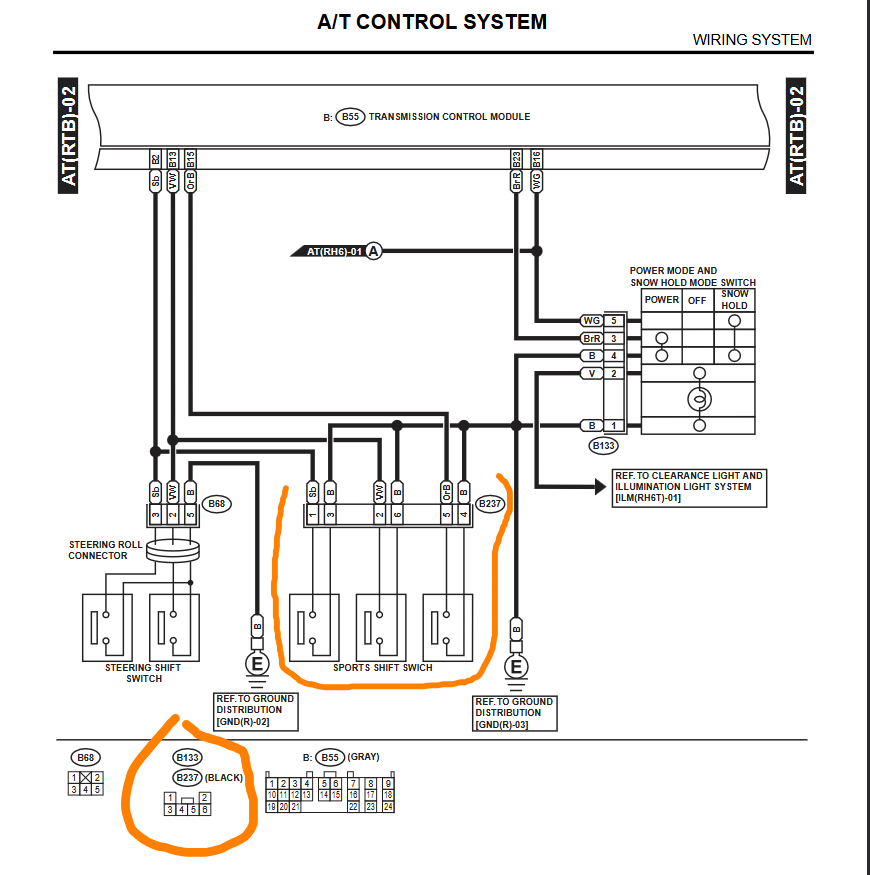
The actual harness itself is a curious piece; the six pin connectors are an exact match to what comes from Subaru's factory, the only thing that changes is the configuration of the wires that go into the harness. It does make me wonder how easy it would be to recreate the part to then make it available for those who still keep these cars from Subaru's engineering high mark still running. It's very familiar to this style of connector, with the four pins on the bottom and two on the outside of the top. The only change would be the configuration of the wires to then invert which direction shifts up and down, which is something for the wiring diagrams in the workshop manuals. Perhaps down the road a recreation of this kit isn't that far outside the realm of possibility.
The feeling of using the manual mode of a automatic transmission in the same way as a straight-cut geared sequential gearbox is truly special. It always felt mechanically clunky to push forward on the gear shift to gear up, having growing up watching the icons of CART, FIA GT, and V8 Supercars and recognizing that you want the less strenuous motion while in the high intensity situation of slowing down for a corner. In city driving or spirited driving, pulling back to gear up just feels right. I do have to imagine that there was a reason for it to be the way it was for Subaru, but sometimes all it takes is a little more wire and two connectors to right what was personally thought was a wrong. To think back in the day this harness kit only cost ¥2,310, or around twenty dollars Canadian.
It isn't always the big dollar parts that will be transformative, sometimes it is just the little things easily accessible that will help make your car truly what you want it to be.