Paying to Mulligan, Not Paying to Win, or Lose
The next leap forward in ranked multiplayer is here, but at least it no longer has a price tag.

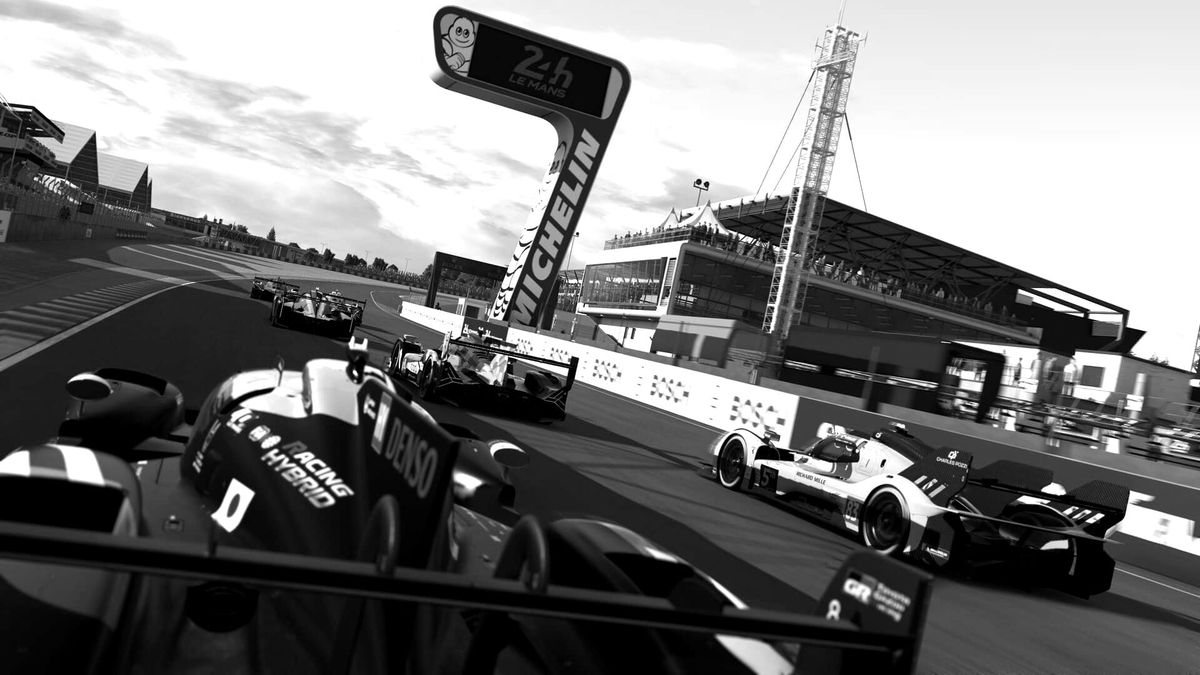
We must be entering bizarro land if Polygon is talking about a realistic racing game at length for any reason. The only time you will see such games talked about in any capacity is in a more generalized primer talking about racing games you should be playing. For such a title to break through the reality of the mainstream outlets not covering this end of the genre because there isn't much to actually cover per se, it would have to be for something truly remarkable.
For a realistic racing game to do that, it took it going into uncharted waters in terms of financialization within the space: by putting a price tag on a fully new feature when it comes to online racing. Much has been made of the price of iRacing's subscription and the price of the license for individual cars and tracks, but without any of the introspection regarding the increasing price of everything while wages have failed and will continue to fail to keep up. But all that gets glossed over as something completely new was set to be financialized from the onset, causing an uproar that simply couldn't be ignored. But the actual feature itself is something worth thinking about in the bigger picture of competitive, ranked gaming.
And so it was, with Marloes Valentina Stella writing about the initially paid-only Event Joker as a part of Le Mans Ultimate's RaceControl Pro subscription service in a piece called Sim-racing game scandalizes community with paid feature that voids race results.
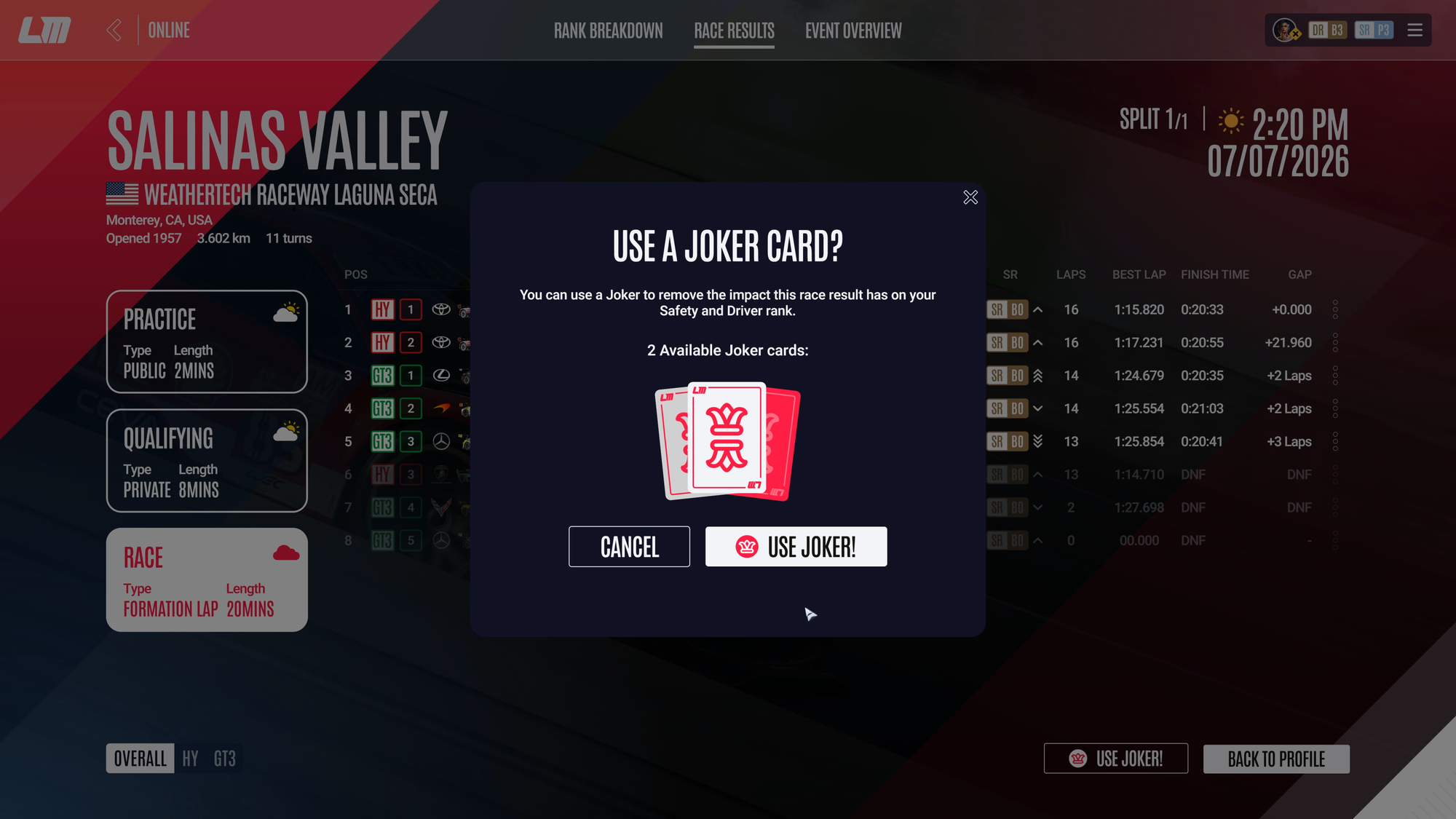
As a part of Le Mans Ultimate's V1.4 update was additional benefits added to the game's paid RaceControl Pro tiered subscription service, being access to dedicated practice servers as well as Event Jokers. Every 10 races you complete you are granted one Event Joker, which when used nullifies the changes to your driver ranking and safety rating that happened in the race. It doesn't affect the points earned in the championship from that individual race, but affects the game's equivalent to an ELO rating and the safety ratings which decide where one lands in the game's rank-based matchmaking.
In that initial introduction, the framing and the purpose of the Event Jokers was that this feature was put in place to nullify the extraneous circumstances that result in major penalties to both sorts of ratings: be it hardware failures, being an victim in a early crash or intentional wreck, or humorously being caught off guard by a cat jumping into your lap. In iRacing, Le Mans Ultimate and Gran Turismo the cost in lost ELO rating from such instances are huge, and often take multiple races and potentially hours to recur what was lost if the bleeding isn't stemmed. In extreme circumstances, a driver rating reset could happen in Gran Turismo Sport and GT7 where you have to start from zero and fully rebuild both ratings. As far as I'm aware, this is among the first times a game with such a ranked multiplayer system has tried to tackle potential events that are in the hands of fate that negatively affect the player and it does make sense that a racing game would be among the first to try.
Having an effective mulligan built in place is the next step these systems should evolve: it's a necessary safety valve if there isn't additional measures in place to prevent players from losing all their ranking either from force majeure or from a string of bad results over a period of time. An adequate protest and reporting system, updated as a part of the V1.4 update, will also assist in correcting potential issues that can arise, but even that still can't help you if your wheel or pedals disconnect mid-race and your car goes straight into the tire barrier at the Daytona Chicane at the Circuit De La Sarthe at 200 miles per hour.
That innocence and optimism about how the system can and should be used does not align with the reality of how most people consume these games. Such a massive emphasis is put on increasing these rankings and having good results that it has skewed how realistic racing games are perceived, and raced. In trying to replicate reality too much while trying to force a meaning where success and results matter more than the fun and community that can be created along the way means that ranked racing, outside of close knit strength of field official series on iRacing and private leagues, has become more skeptical and cynical as time has gone on.
The ultimate price being paid is the fact that we should be having fun first with how we can race like our heroes do on any given Sunday, and the freedom that exists if we just enjoy the infinitely unique journeys that are possible rather than a destination that we are told is always the goal. But with so much emphasis on ranked racing, on made-up achievements, trophies, ratings and championships, of course the vast majority who only know how to exist within those walls will see something like the Event Joker as taking the piss, something that can and will be exploited, and claim it's the worst idea ever.
I must reiterate: the Event Joker was not pay to win, or even pay to not lose. It does not void the actual result of the race, but voids changes in the ELO and Safety Ratings. It's acts as a neutral force that wipes the consequences of the race, but not the actual points result of the race itself. Will some people weaponize it if given the chance? Given the outright cynical nature that comes to the surface if someone takes even the most minor offense to anything on track? Of course; that's not going to change the current realities of virtual racing, and that griefing will always exist. Even if someone uses the Event Joker after intentionally wrecking someone, it's not a shield against any potential protest they have to deal with. And on a long enough timeline, even with the Event Joker, everyone who puts enough time in the ranked racing system will find themselves where they should be regardless.
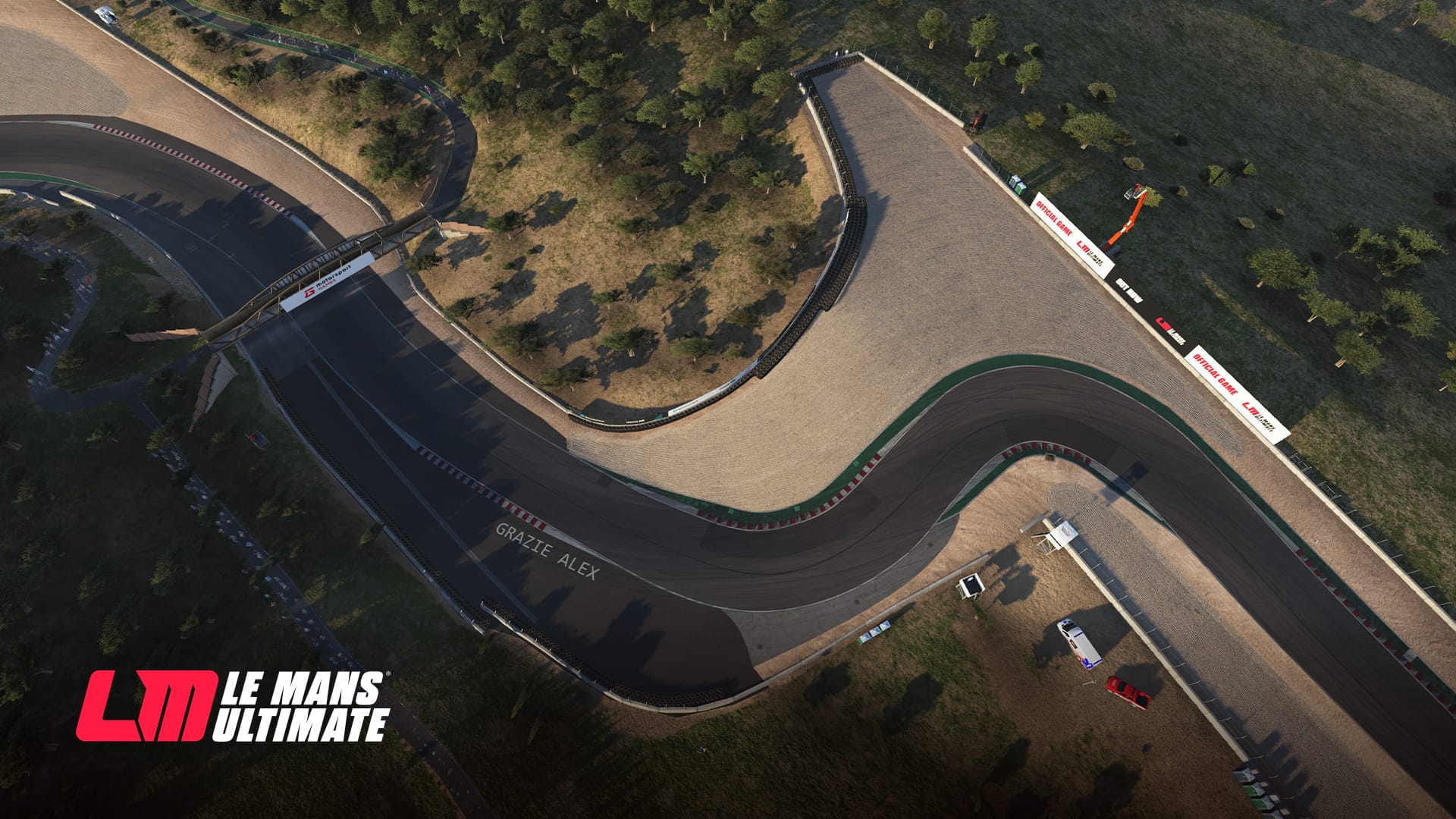
This is a earned mulligan; a mulligan that should exist if such ratings are given too much meaning by the powers that be with the players responding in kind. If you finished outside the top fifteen in the race, but it was because of too many borderline track limits calls that landed against you compared to the cars you were following; you still had a rough day at the office but the mulligan understands how that result came to be should demand a response to the unusual.
Those current, cynical realities on-track are what such a well-meaning, but innocent new structure to a ELO-type system has to exist in. And you're saying the Event Joker was initially behind a monthly subscription paywall? No wonder it erupted out of Studio 397's control fueled by rampant misinformation that sensationalized a mulligan system that resulted in Marloes Valentina Stella talking about it.
From an outsider's perspective, it's also easy to side with those that have unified their voice against both the system and the financialised nature of it without understanding the atmosphere of racing in the virtual world to where such an innovation would even be considered. Compared to any other competitive gaming environment, racing is perhaps the most likely to have force majeure happen though it's most often by the hand of an opponent on track. The additional layer of the Event Joker it being financialized should be, and was, criticized to such an extent that Studio 397 quickly course corrected and made it free to everyone in a blog post from Motorsport Games CEO Stephen Hood.
The ongoing proliferation of subscription services and micro-transactions is nothing new in the realm of the realistic racing game; servers, licensing fees and the continuing cost of development and labour must continue to be paid well after the game has been initially bought. The quiet reality is that titles like iRacing, Le Mans Ultimate and RaceRoom do need to be seen as MMORGs when it comes to the ongoing funding of these ventures; it's just a matter of what steps developers are willing to take since such titles don't have the same natural draw and call to adventure as their MMORPG counterparts. So many conversations about new fees and the increasing price of goods in the gaming et all often forgets the realities of wages failing to keep up and the impacts of the increasing price of computer parts because of data centers being used to create generative ai content and for storing mass surveillance data. It'll forget about the profits such corporations are making regardless, and their unwillingness to come to the table in good faith with workers.
To say that this was a step too far and such a system should be free to everyone is the very minimum, though such a system should still exist. There isn't mulligans if you retire from a real world race sure, but we're racing in the virtual world; and we can do more to make it a better environment for everyone who wants to race.
Perhaps the argument should be looking at how we've gone too far in putting emphasis on those ranked, official races and the arbitrary numbers gained and lost. Racing in the virtual world is as post-modern as it gets, but what will it take for entire player-bases to put the pressure off of themselves and be able to joy the act of racing again? Perhaps the creation of an Event Joker, an innocent mulligan, in the first place tells us how much the plot has truly been lost?
Stephen Hood stated in the blog post talking about the course correction regarding the Event Jokers that poor driving etiquette, "(is) a sim racing problem we believe can be tackled."
What happens when the developers only now are claiming to take such an issue seriously, after they collectively created the problem in the first place?
For now, the right thing has been done in making it free. Maybe it should just be called an Event Mulligan instead of giving content creators an excuse to rehash old, tired Joker memes birthed on 4chan.